

Sooty-black velvety buds in opposite pairs, the end bud shaped like a bishop's mitre
Ash — Fraxinus excelsior. The classic winter twig identification.

Nature · Trees
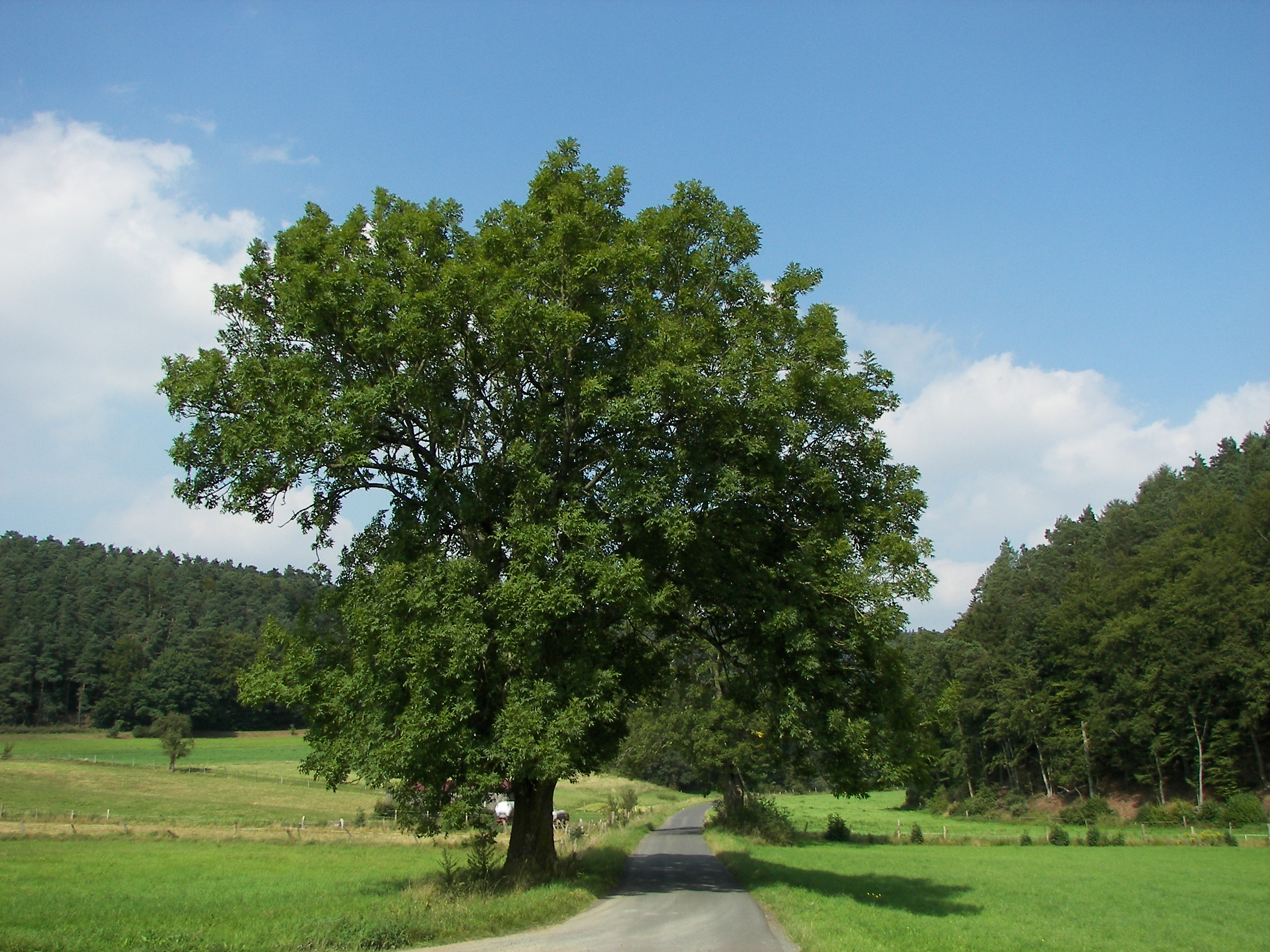
Deciduous · to 35 m · last into leaf, first out
Fraxinus excelsior — Oleaceae
The common or European ash is the airy, late-leafing tree of hedgerows, limestone dales and mixed woodland, casting light shade that lets a rich ground flora grow beneath. Its sooty-black buds are the single most reliable winter clue to any British tree. It is now in steep decline from ash dieback, caused by the fungus Hymenoscyphus fraxineus.
Sooty-black velvety buds in opposite pairs, the end bud shaped like a bishop's mitre
Ash — Fraxinus excelsior. The classic winter twig identification.
Pinnate leaves in opposite pairs with 7–13 stalkless leaflets, casting the light shade that lets bluebells and dog's mercury flourish
Ash. Rowan's pinnate leaves are alternate, not opposite.
Bunches of winged 'keys' hang brown through the winter after the leaves have fallen green
Ash — the samaras are called ash keys.
Yggdrasil, the Norse world tree, was said to be one of these, and Odin hung nine nights upon it
Ash.
Its springy, shock-absorbing timber made hockey sticks, tool handles, oars and the frame of the Morgan car
Ash.
Hymenoscyphus fraxineus, a fungus first found in Britain in 2012, is destroying it across the country
Ash dieback, formerly called chalara.
Last of the British broadleaves into leaf and among the first out, with paired leaf scars and a light, open crown
Ash.