🪴 GoDeep
Search
← University Challenge
Portrait of Hornbeam

Nature · Trees

Hornbeam

Deciduous · to 30 m

Carpinus betulus — Betulaceae

The hornbeam is beech's understudy: similar in outline and in keeping dead leaves through winter, but with toothed, deeply ribbed leaves and a strangely muscled, fluted trunk. Its wood is the hardest of any British native, which is why it went into cogs, mallets and butchers' blocks. Epping Forest and Hatfield Forest hold famous ancient hornbeam pollards.

How to know it

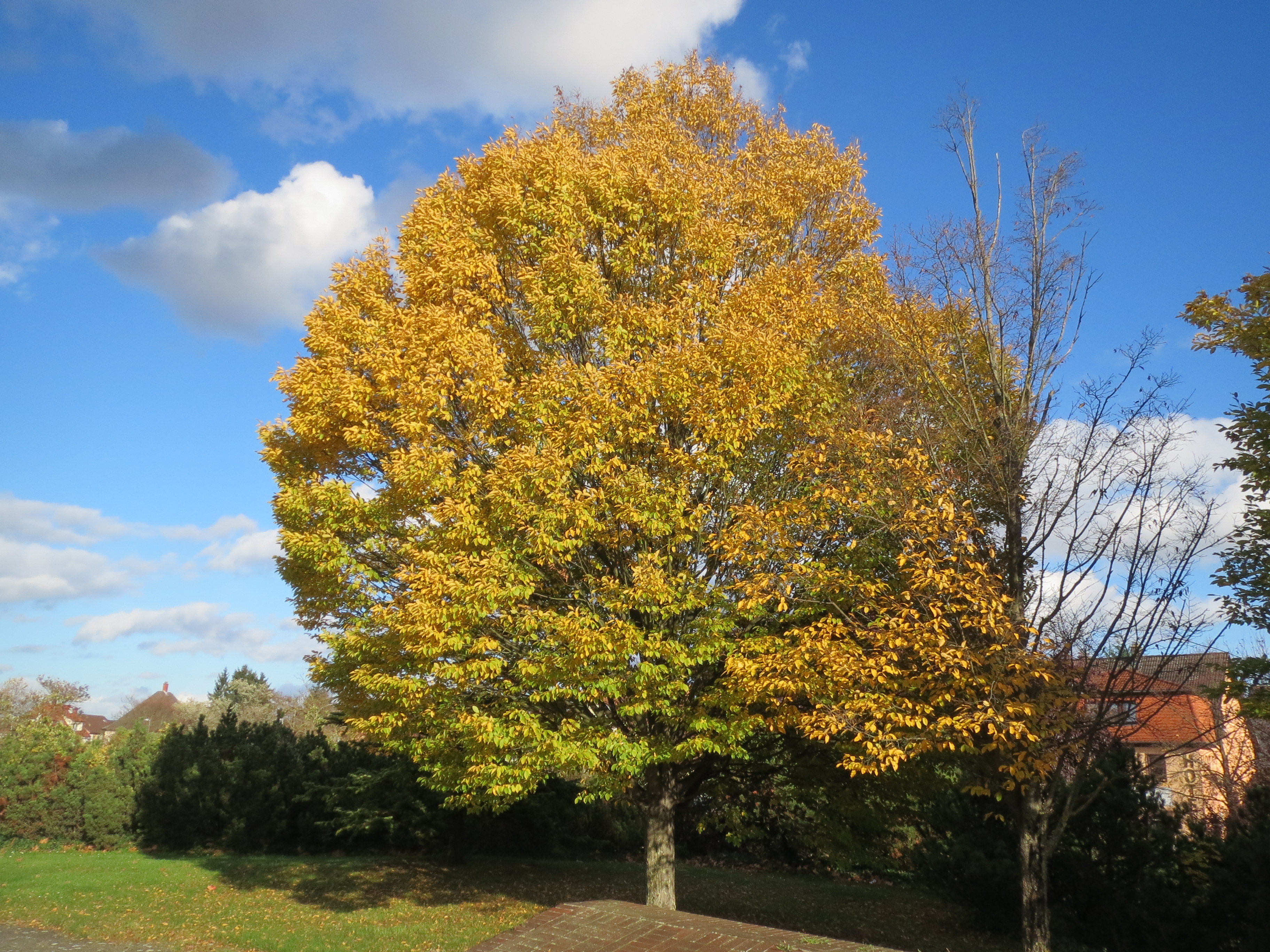
Whole tree of Hornbeam
Whole tree AnRo0002 · CC0
Leaf of Hornbeam
Leaf blahedo · CC BY-SA 2.5
Bark of Hornbeam
Bark Liné1 · CC BY-SA 3.0

How to spot them

  • ▸Trunk fluted and twisted like flexed muscle, with smooth pale grey bark and vertical silvery streaks
  • ▸Oval leaves with sharp double teeth and strong parallel veins, more pleated and ribbed than beech
  • ▸Fruit in drooping clusters of papery three-lobed bracts, each holding a small ribbed nut
  • ▸Buds shorter than beech's, closely pressed to the twig and slightly curved inwards

How to know it

A trunk fluted and twisted like flexed muscle, under smooth pale grey bark streaked with silver

Hornbeam — Carpinus betulus.

Sharply double-toothed, strongly pleated leaves that look like a toothed version of a much commoner tree's

Hornbeam. Beech leaves are wavy-edged and untoothed.

Fruit hangs in clusters of papery three-lobed bracts, each with a small ribbed nut at its base

Hornbeam.

The hardest timber of any British native, used for cogs, mallets, skittles, piano action parts and butchers' blocks

Hornbeam — the name means 'hard tree'.

Epping Forest and Hatfield Forest are famous for ancient pollards of this species

Hornbeam.

Its buds press close to the twig and curve slightly inwards, unlike the long spreading buds of its lookalike

Hornbeam.

Quick-fire facts

  • •Carpinus betulus — the specific epithet means 'birch-like', and hornbeam is indeed in the birch family, Betulaceae
  • •The English name means 'hard tree': horn for hardness, beam from Old English for tree
  • •Its wood is the hardest and heaviest of any British native, and was used for cogs and mill machinery
  • •Traditionally pollarded and coppiced around London for firewood and charcoal — Epping Forest is the classic site
  • •Like beech it is marcescent, holding dead leaves into winter, so it makes good hedging
  • •Native chiefly to south-east England; widely planted elsewhere, including as street trees
  • •The fruit's three-lobed wing distinguishes it at once from beech mast
  • •Hop hornbeam (Ostrya) is a different genus with hop-like fruit clusters

Drill it — 6 cards

1 / 6new card

Sources