
The Burial of the Count of Orgaz (1586–1588)
Church of Santo Tomé, Toledo
Saints Stephen and Augustine lower the count into his tomb while heaven opens above; still in the church it was painted for
Image: El Greco · Public domain, Wikimedia Commons

Art
1541–1614 · Greek (Cretan), active in Spain
Mannerism / Spanish Renaissance
El Greco ("The Greek"), born Doménikos Theotokópoulos in Crete, trained as an icon painter before working in Venice and Rome and settling in Toledo, Spain, in 1577. His ecstatic religious paintings, with elongated figures and flickering, unnatural colour, were long thought eccentric but were rediscovered as a forerunner of Expressionism and Cubism.
The Burial of the Count of Orgaz (1586–1588)
Church of Santo Tomé, Toledo
Saints Stephen and Augustine lower the count into his tomb while heaven opens above; still in the church it was painted for
Image: El Greco · Public domain, Wikimedia Commons
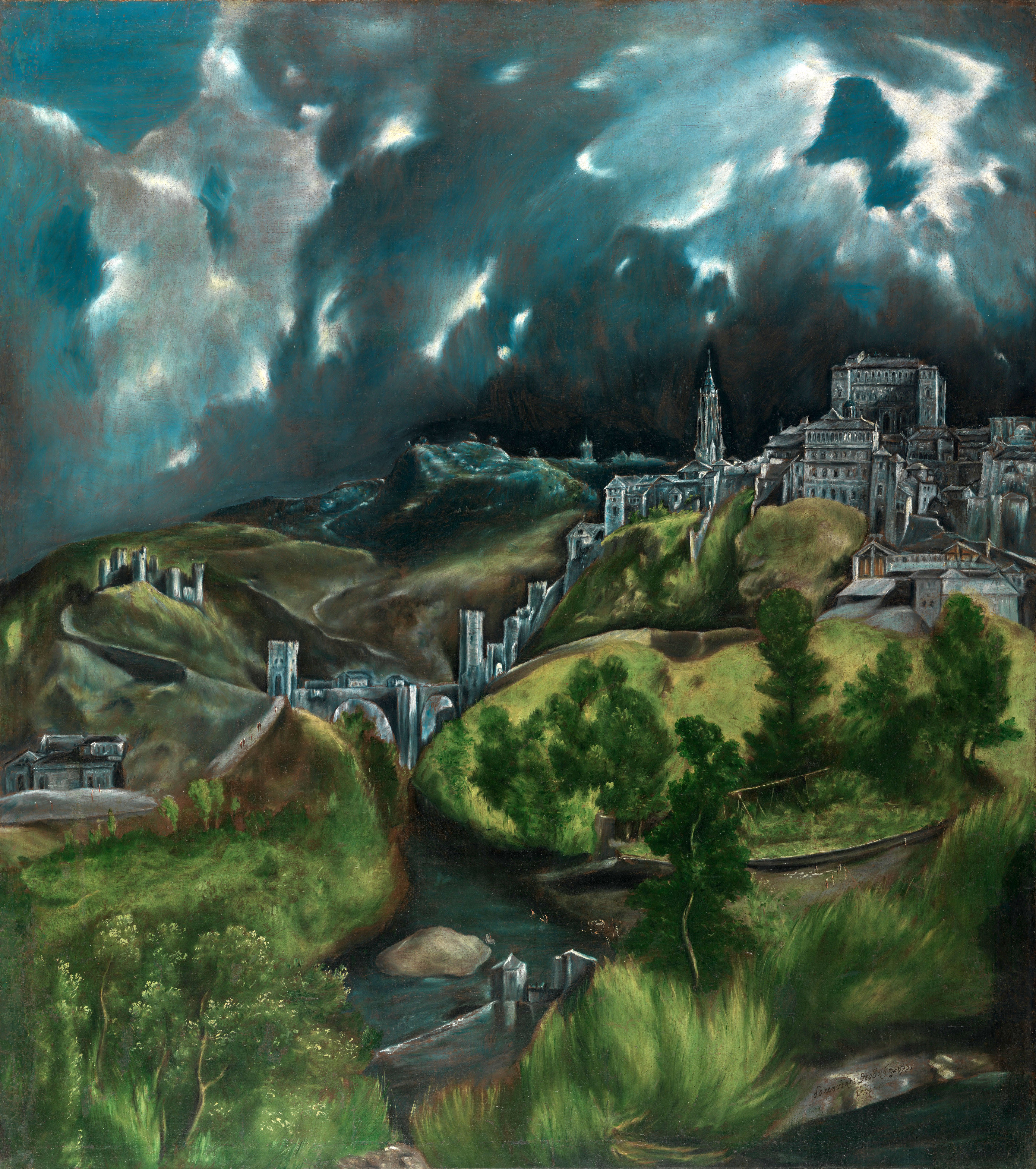
View of Toledo (c. 1599–1600)
Metropolitan Museum of Art, New York
Brooding green landscape under a thunderous sky; one of the most famous landscapes in Spanish art
Image: El Greco · Public domain, Wikimedia Commons

The Disrobing of Christ (El Expolio) (1577–1579)
Toledo Cathedral (sacristy)
Christ in a blazing red robe hemmed in by a crowd; the cathedral chapter disputed its fee and content
Image: El Greco · Public domain, Wikimedia Commons

The Opening of the Fifth Seal (1608–1614)
Metropolitan Museum of Art, New York
Late apocalyptic vision of St John; often linked to Picasso's Les Demoiselles d'Avignon
Image: El Greco · CC0, Wikimedia Commons

Laocoön (c. 1610–1614)
National Gallery of Art, Washington, D.C.
His only surviving mythological painting, with Toledo standing in for Troy in the background
Image: El Greco · Public domain, Wikimedia Commons