
Susanna and the Elders (1610)
Schloss Weißenstein, Pommersfelden, Germany
Her earliest known signed and dated work, painted aged about 17
Image: Artemisia Gentileschi · Public domain, Wikimedia Commons

Art
1593–c. 1656 · Italian
Baroque (Caravaggesque)
Artemisia Gentileschi was the most celebrated woman painter of the Italian Baroque, trained by her father Orazio in the dramatic style of Caravaggio. She worked in Rome, Florence, Venice, Naples and London, specialising in powerful heroines from the Bible and history. Largely forgotten for centuries, she has become an icon of feminist art history.
Susanna and the Elders (1610)
Schloss Weißenstein, Pommersfelden, Germany
Her earliest known signed and dated work, painted aged about 17
Image: Artemisia Gentileschi · Public domain, Wikimedia Commons
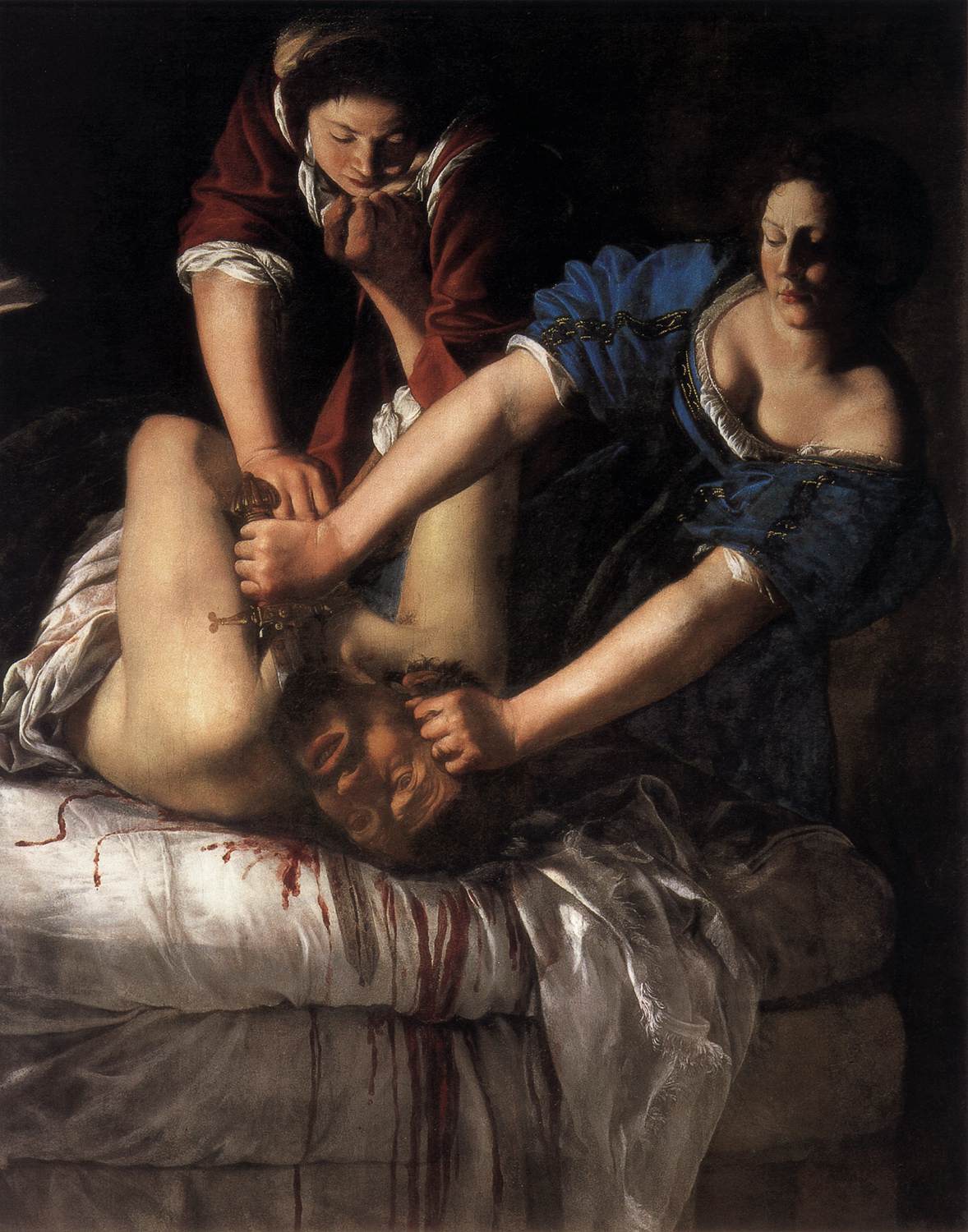
Judith Slaying Holofernes (c. 1612–1613)
Museo di Capodimonte, Naples
The first of her two versions of the brutal beheading
Image: Artemisia Gentileschi · Public domain, Wikimedia Commons
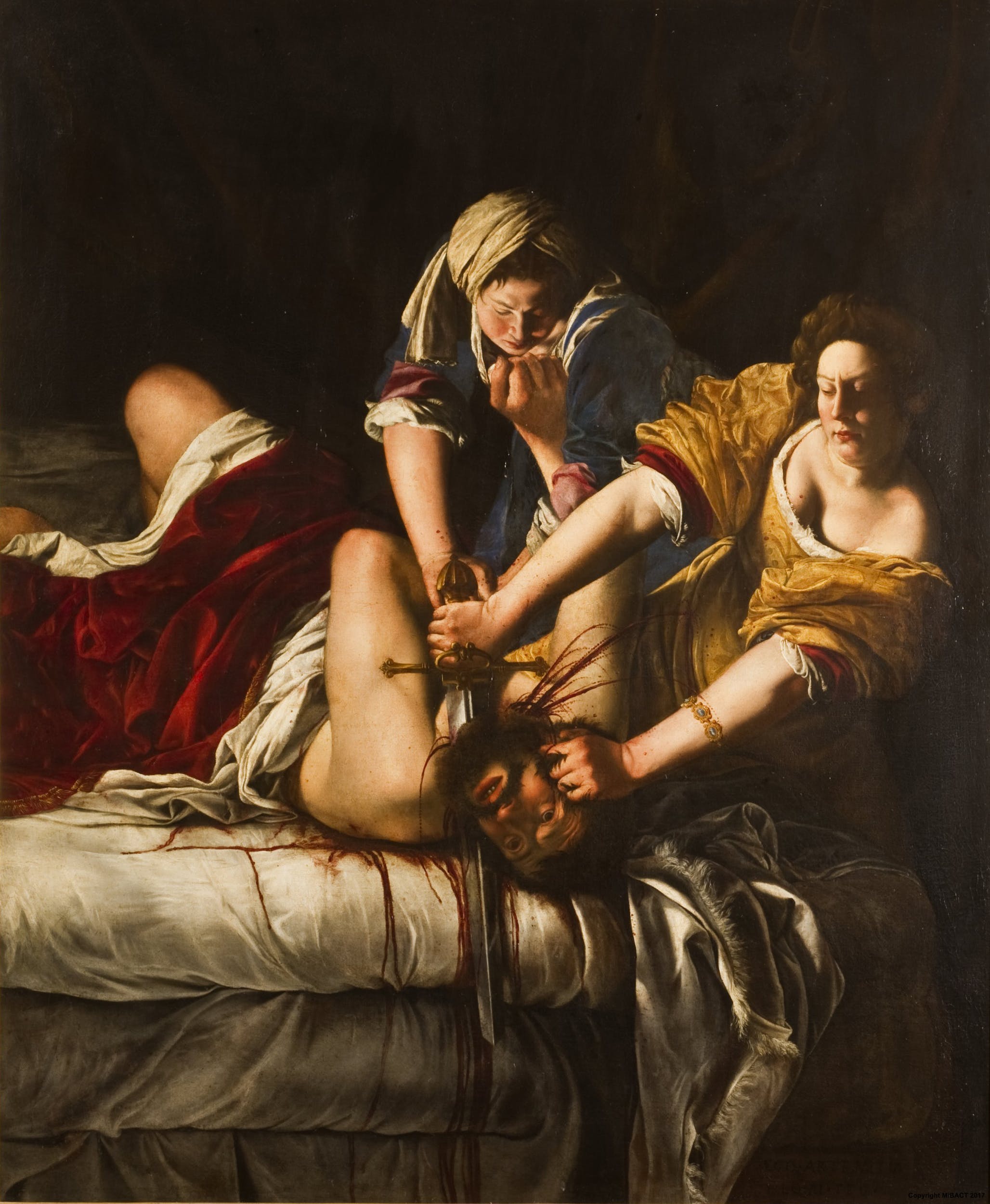
Judith Slaying Holofernes (c. 1620)
Uffizi, Florence
Larger second version, with blood arcing across the sheets
Image: Artemisia Gentileschi · Public domain, Wikimedia Commons

Judith and Her Maidservant (c. 1623–1625)
Detroit Institute of Arts
Candlelit aftermath: Judith shields the flame as her maid bags the severed head
Image: Artemisia Gentileschi · Public domain, Wikimedia Commons
Self-Portrait as the Allegory of Painting (La Pittura) (c. 1638–1639)
Royal Collection, UK
Shows herself mid-brushstroke as the personification of Painting; once owned by Charles I
No free image available (likely still in copyright) · see it on Wikipedia

Self-Portrait as Saint Catherine of Alexandria (c. 1615–1617)
National Gallery, London
Acquired in 2018 — one of very few works by a woman in the gallery's collection
Image: Artemisia Gentileschi · Public domain, Wikimedia Commons