
The Elevation of the Cross (1610–1611)
Cathedral of Our Lady, Antwerp
Straining labourers haul the cross upright in a dynamic diagonal triptych
Image: Peter Paul Rubens · Public domain, Wikimedia Commons

Art
1577–1640 · Flemish
Baroque
Peter Paul Rubens was the dominant painter of Flemish Baroque art, running a huge workshop in Antwerp that produced altarpieces, portraits, landscapes and vast decorative cycles for the courts of Europe. He was also a scholar and diplomat, knighted by both Charles I of England and Philip IV of Spain. His energetic, sensuous style made "Rubenesque" a byword for fleshy figures.
The Elevation of the Cross (1610–1611)
Cathedral of Our Lady, Antwerp
Straining labourers haul the cross upright in a dynamic diagonal triptych
Image: Peter Paul Rubens · Public domain, Wikimedia Commons

The Descent from the Cross (1612–1614)
Cathedral of Our Lady, Antwerp
Christ's pale body slides down a white shroud; commissioned by the Arquebusiers' Guild
Image: Peter Paul Rubens · Public domain, Wikimedia Commons

Samson and Delilah (c. 1609–1610)
National Gallery, London
Samson sleeps in Delilah's lap as his hair is cut; its attribution has been disputed by some critics
Image: Peter Paul Rubens · Public domain, Wikimedia Commons

The Marie de' Medici Cycle (1622–1625)
Louvre, Paris
Twenty-four huge canvases glorifying the French queen mother, made for the Luxembourg Palace
Image: Ivo Jansch · CC BY-SA 2.0, Wikimedia Commons
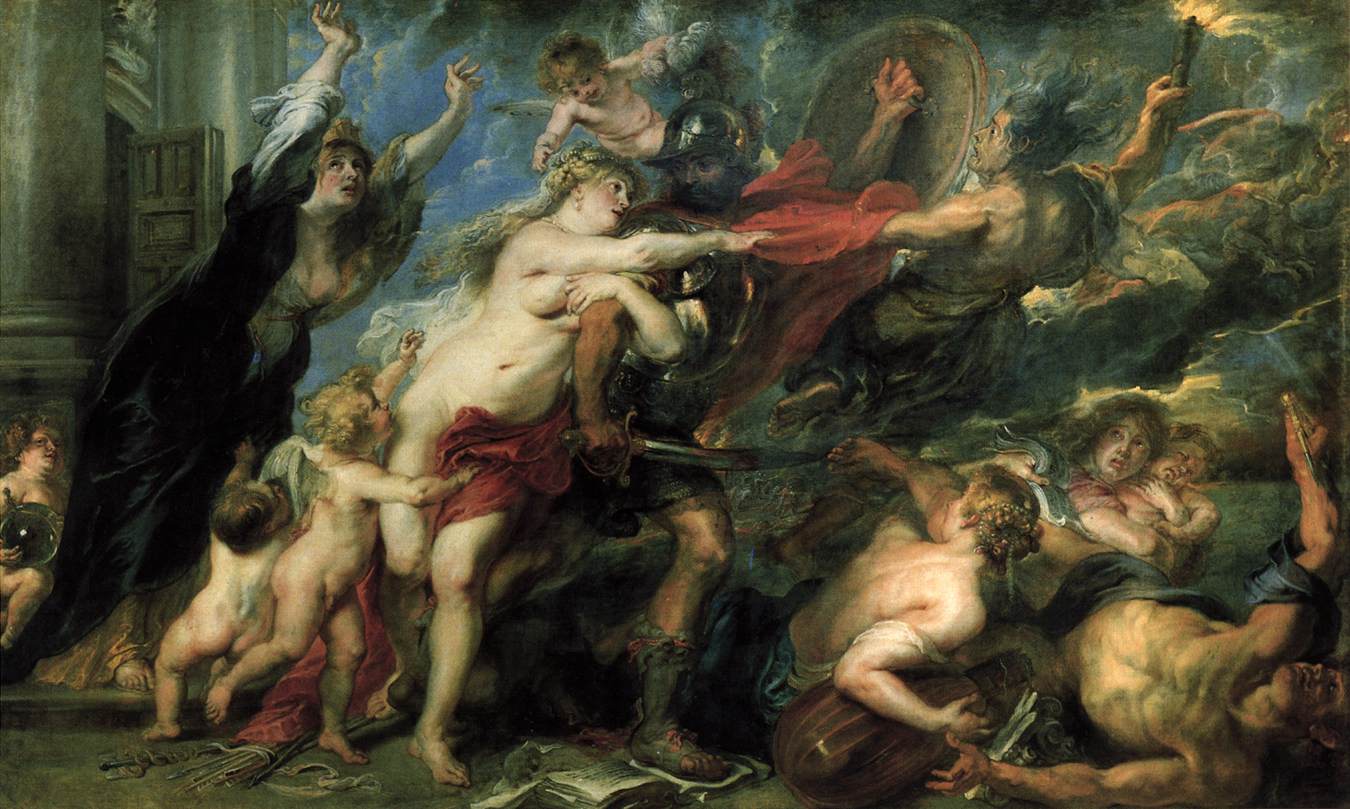
The Consequences of War (1638–1639)
Palazzo Pitti, Florence
Mars breaks free of Venus to wreak havoc — an allegory of the Thirty Years' War
Image: Peter Paul Rubens · Public domain, Wikimedia Commons
Le Chapeau de Paille (c. 1622–1625)
National Gallery, London
Portrait of a woman (probably Susanna Lunden) in a hat that is actually felt, not straw