🪴 GoDeep
Search
← University Challenge
Portrait of Yew

Nature · Trees

Yew

Evergreen conifer · to 20 m · some over 2,000 years

Taxus baccata — Taxaceae

The churchyard tree: a dark, slow-growing evergreen conifer with flaky red-brown bark, capable of living for thousands of years and of regenerating from a hollow shell. Every part is poisonous except the red flesh of the aril, its wood made the English longbow, and a compound from its relatives gave the chemotherapy drug paclitaxel.

How to know it

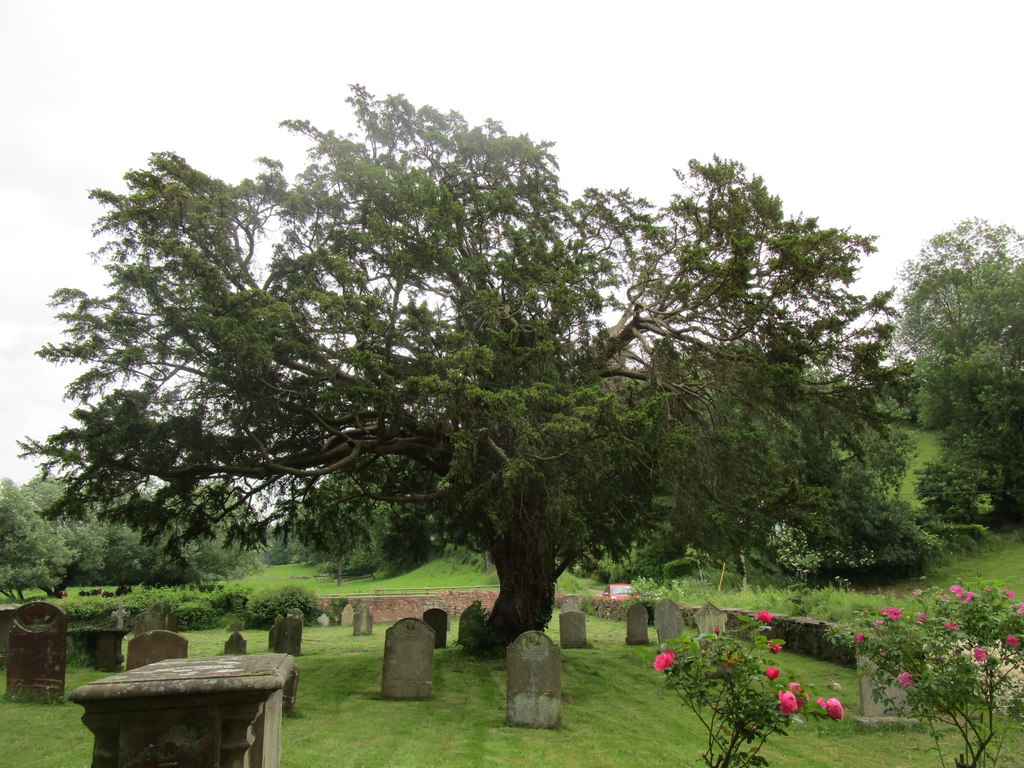
Whole tree of Yew
Whole tree Jonathan Thacker · CC BY-SA 2.0
Leaf of Yew
Leaf NobbiP · CC BY-SA 3.0
Bark of Yew
Bark Adrian Tync · CC BY-SA 4.0

How to spot them

  • ▸Flat, dark green needles, soft-tipped, set in two ranks along the twig, paler beneath
  • ▸Bright red fleshy cup (an aril), open at the end, with a single dark seed visible inside
  • ▸Reddish-brown bark flaking in thin scales; trunk often fluted, hollow or made of fused stems
  • ▸Dense, almost black shade beneath; often the oldest thing in a churchyard
  • ▸Dioecious: male trees puff clouds of pollen in spring, female trees carry the red fruit

How to know it

Flat dark needles in two ranks, and a bright red fleshy cup open at the end with a single seed inside

Yew — the fruit is an aril, not a berry.

Flaking red-brown bark on a fluted, hollow trunk, casting almost black shade in a churchyard

Yew.

Every part is poisonous except the red flesh around the seed, thanks to the alkaloid taxine

Yew. The seed itself is highly toxic, the aril flesh is not.

Its springy heartwood-and-sapwood combination made the English longbow of Crécy and Agincourt

Yew. Most bow staves were actually imported from Spain and Italy.

The tree at Fortingall in Perthshire is claimed as one of Europe's oldest living things

Yew — the Fortingall Yew.

Paclitaxel, a chemotherapy drug for breast and ovarian cancer, was first isolated from the bark of a related species

Yew. Paclitaxel (Taxol) came from the Pacific yew, Taxus brevifolia.

Its conifer seed is not held in a cone, and it can regrow entirely from a hollow shell

Yew.

Quick-fire facts

  • •Taxus baccata — baccata means 'berry-like', for the aril; taxine is the alkaloid that makes it poisonous
  • •A conifer that bears no cone: the seed sits in a fleshy red aril, which birds eat and disperse
  • •Every part is toxic except the aril flesh; the seed, needles and bark contain taxine alkaloids
  • •The longbow was made from yew, using sapwood for the back and heartwood for the belly; most staves were imported
  • •The Fortingall Yew in Perthshire is claimed to be between 2,000 and 3,000 years old
  • •Paclitaxel (Taxol), used against ovarian and breast cancer, was isolated from the Pacific yew Taxus brevifolia in the 1960s
  • •Yew can regenerate from a hollow trunk and layer new stems, which makes dating ancient trees extremely difficult
  • •Many churchyard yews predate their churches, suggesting the sites were sacred before Christianity
  • •The Kingley Vale yew forest in West Sussex is one of Europe's finest, and Britain's first National Nature Reserve

Drill it — 8 cards

1 / 8new card

Sources