🪴 GoDeep
Search
← University Challenge
Portrait of Wych elm

Nature · Trees

Wych elm

Deciduous · to 30 m

Ulmus glabra — Ulmaceae

Britain's only unambiguously native elm, the wych elm is a tree of northern and western woods, stream sides and Scottish glens. Its leaves are big, rough as sandpaper and strikingly lopsided at the base — the elm family's signature. Dutch elm disease destroyed most mature British elms from the late 1960s, and the wych elm suffered with them.

How to know it

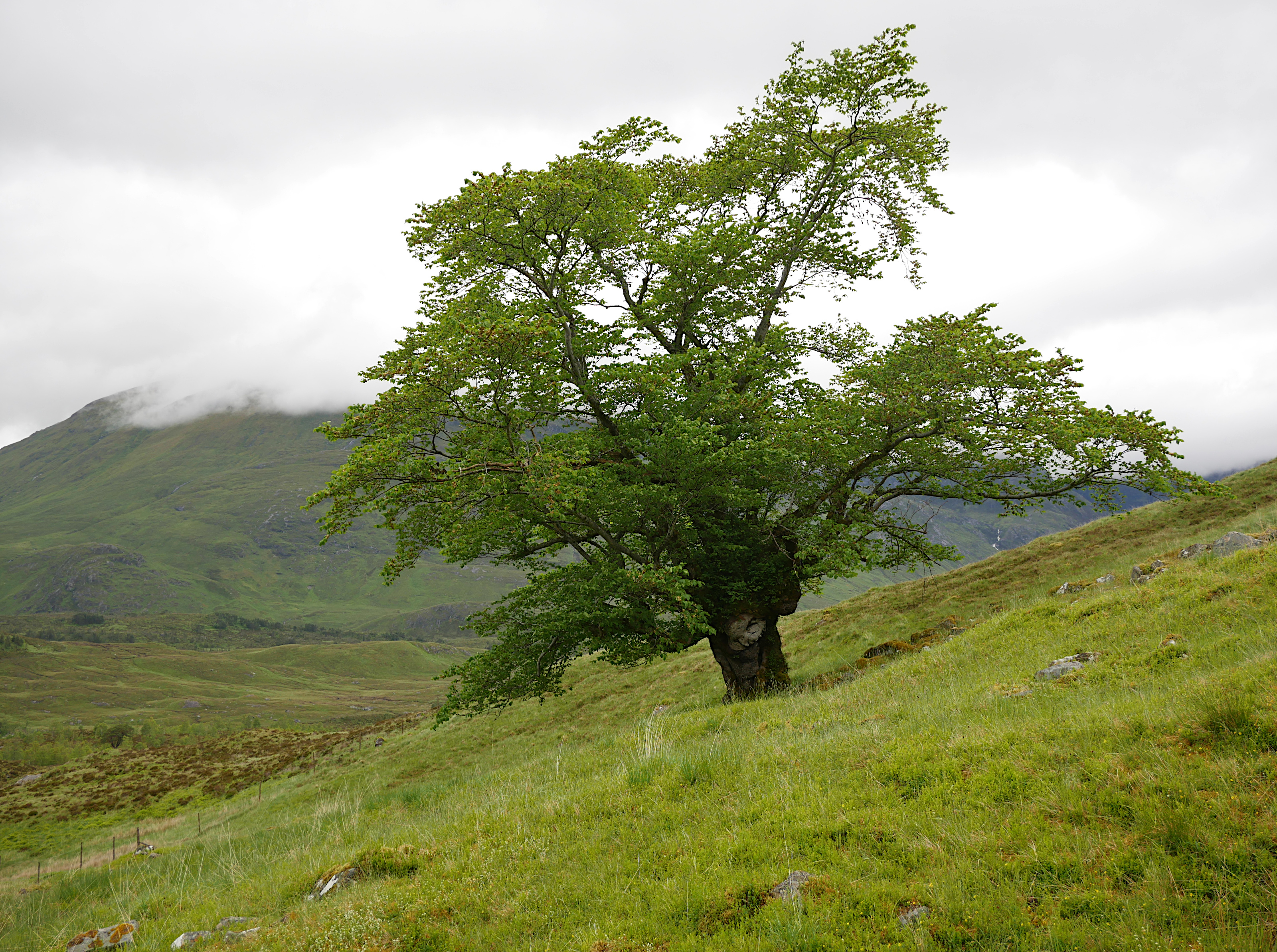
Whole tree of Wych elm
Whole tree Craig Wallace · CC BY-SA 2.0
Leaf of Wych elm
Leaf Willow · CC BY 2.5
Bark of Wych elm
Bark T.Voekler · CC BY-SA 3.0

How to spot them

  • ▸Leaves markedly asymmetric at the base, one side overlapping the stalk, rough-hairy above like sandpaper
  • ▸Leaf often with a long drip tip, sometimes three-pointed, with strong straight veins
  • ▸Tufts of dark red flowers in February on bare twigs, before the leaves
  • ▸Papery seeds (samaras) in pale green clusters, the seed set in the middle of a rounded wing
  • ▸Does not sucker from the root, unlike English elm; bark smooth then grey and ridged

How to know it

Leaves rough as sandpaper and strikingly lopsided at the base, one side overlapping the stalk

Wych elm — Ulmus glabra. The asymmetric leaf base is the elm signature.

Tufts of dark red flowers open on bare twigs in February, before any leaves

Wych elm.

Papery green discs in clusters, each with the seed set right in the middle of its rounded wing

Wych elm samaras.

Britain's only unambiguously native member of its genus, and the one that does not sucker from the root

Wych elm. English elm spread largely by suckers from clonal stools.

Ophiostoma novo-ulmi, carried by bark beetles, destroyed most mature British trees of its genus from the late 1960s

Dutch elm disease, which hit the wych elm along with the rest.

Its springy timber made longbows before yew, and the water pipes and keels of London

Elm — and wych elm in particular. Its wood also made coffins and chair seats.

Because it sets seed rather than spreading clonally, some resistance survives, and Edinburgh's streets still carry thousands of mature trees of this species

Wych elm.

Quick-fire facts

  • •Ulmus glabra — glabra means 'smooth', misleadingly, since the leaves are rough; it refers to the bark
  • •The only elm generally accepted as native to Britain; English elm (U. minor 'Atinia') was probably brought by early farmers
  • •'Wych' is from an Old English root meaning pliant or supple, not from 'witch'
  • •Dutch elm disease is caused by the fungi Ophiostoma ulmi and the more aggressive O. novo-ulmi, spread by elm bark beetles of the genus Scolytus
  • •The epidemic that began in Britain in the late 1960s killed tens of millions of elms; the name refers to Dutch research, not a Dutch origin
  • •Wych elm reproduces by seed, so some genetic resistance persists; English elm spread clonally by suckers
  • •Elm was the standard timber for water mains, wheel hubs, keels and coffins because it resists decay when kept wet
  • •The white-letter hairstreak butterfly depends entirely on elm and declined sharply with the disease
  • •Brighton and Hove holds a National Elm Collection, protected by the barrier of the South Downs and the sea

Drill it — 8 cards

1 / 8new card

Sources