
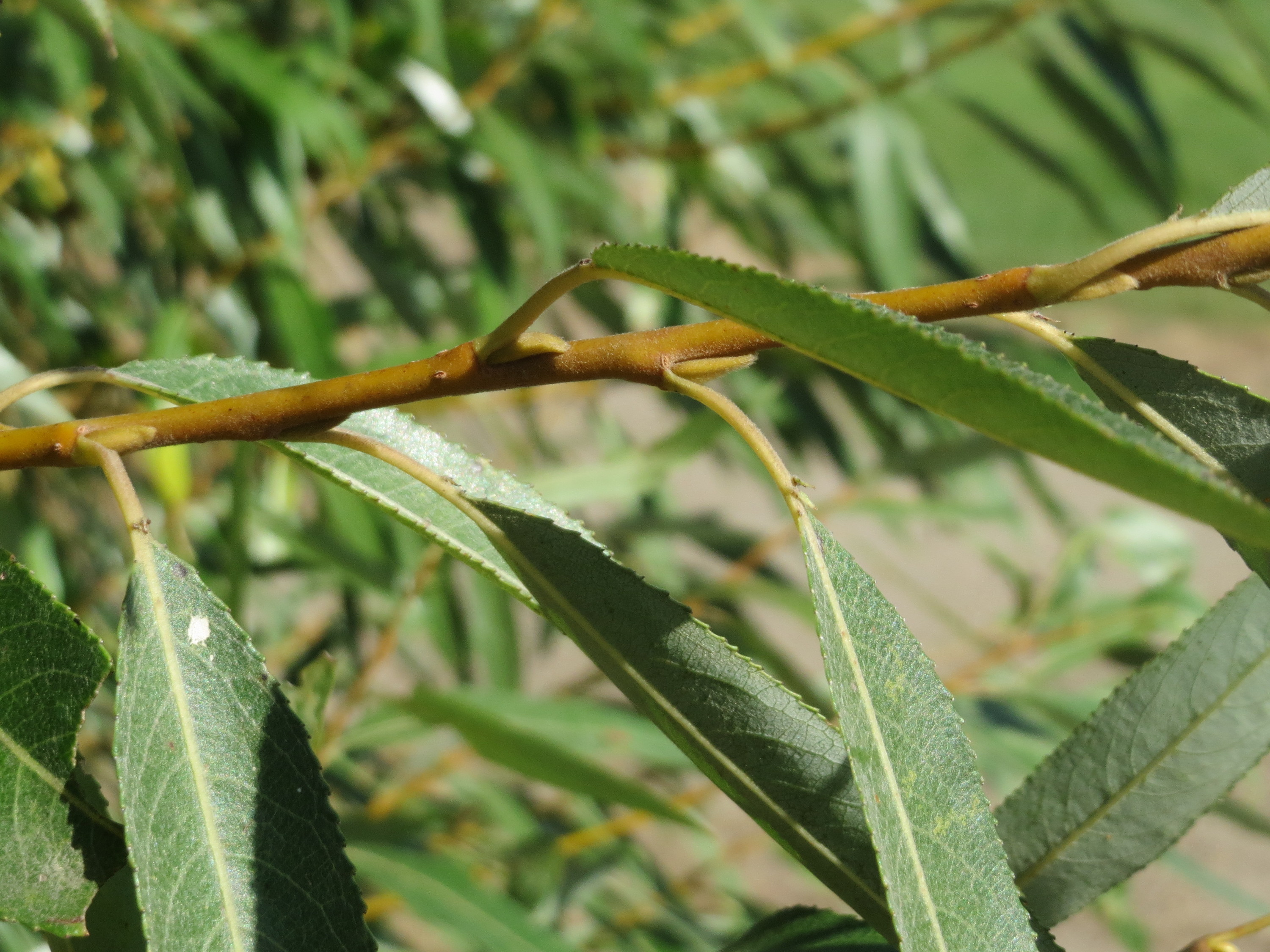

The largest of the British willows, with silky silvery-white undersides to its leaves and a leaning crown by the river
White willow.

Nature · Trees
Native · deciduous, to 25 m · flowers early spring · riversides and wet ground
Salix alba — Salicaceae
The largest British willow, white willow is a leaning riverside tree with silky, silvery-white undersides to its narrow leaves. Its cultivated relative, the cricket-bat willow, is a hybrid of white and crack willow. Bark from all willows contains salicin, from which aspirin was developed.
The largest of the British willows, with silky silvery-white undersides to its leaves and a leaning crown by the river
White willow.
The tree from which the cricket-bat willow was bred, crossed with the brittle crack willow
White willow (Salix alba).
Its bark contains salicin, the compound from which aspirin is derived, and was chewed in medieval times for pain relief
White willow.
Often depicted as a tree of mourning, and beside one Ophelia drowns
White willow — willows generally.
Northern people used its branches in place of palms on Palm Sunday
White willow — willows generally.
Dioecious, with the down-wrapped seeds carried by wind, and prone to watermark disease
White willow.