A hybrid between the Oriental plane and the American sycamore, first noticed in a London nursery in the mid-1600s
London plane. Woodland Trust credits John Tradescant the younger with noticing it.

Nature · Trees
Neophyte (hybrid of 17th-century origin) · deciduous to 35 m · streets and city parks
Platanus × hispanica — Platanaceae
The great street tree of British cities, a hybrid between the Oriental plane and the American sycamore, thought to have arisen in a garden in the 17th century and planted across London from the late 18th. Its flaking, camouflage-patterned bark sheds pollution, and it copes with polluted air and compacted soil better than almost any other tree.

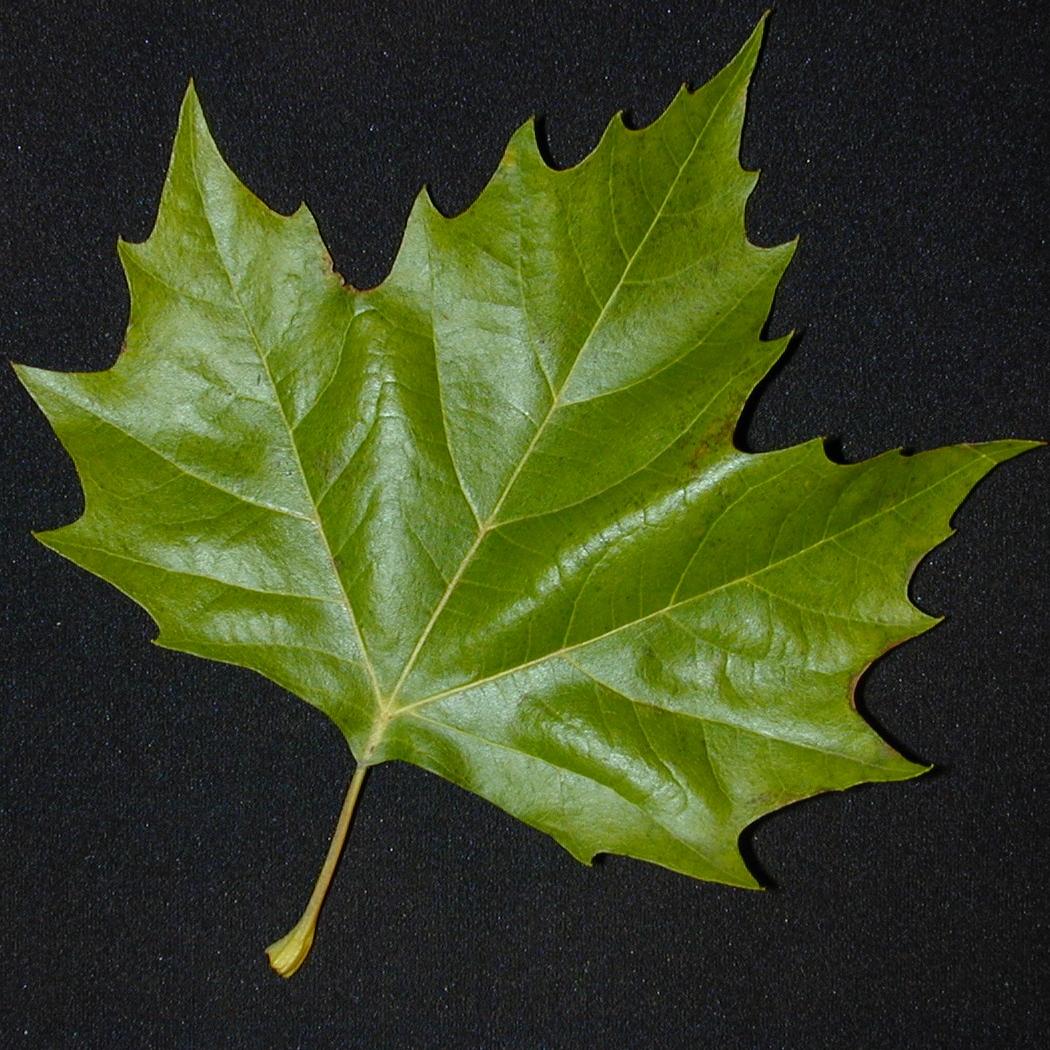

A hybrid between the Oriental plane and the American sycamore, first noticed in a London nursery in the mid-1600s
London plane. Woodland Trust credits John Tradescant the younger with noticing it.
Its bark flakes away in patches, giving a camouflage pattern and helping shed pollution
London plane.
Hanging spiky seed balls on long stalks break up over winter on this city street tree
London plane.
Its young leaves and seeds carry short hairs that can irritate the airways of asthmatics
London plane (Forest Research).
In Inner London it has the largest leaf area of any tree species, helping air quality and shade
London plane (London Tree Report, cited by the Woodland Trust).
Its maple-like leaves are alternate, not opposite, which separates it from a sycamore
London plane.
A branch-shedding fungal disease called massaria affects it in the UK, but the notifiable canker stain has not been found here
London plane.