🪴 GoDeep
Search
← University Challenge
Portrait of Lodgepole pine

Nature · Trees

Lodgepole pine

Neophyte (introduced 1855) · evergreen conifer to 25 m · upland and peatland plantations

Pinus contorta — Pinaceae

A hardy pine from western North America, introduced to Britain in 1855 and planted widely on poor upland ground, particularly the deep peats of northern Scotland, where it survived when little else would. Poor seed choice gave crooked trees, and many stands are now being cleared to restore peatland habitat. It is also highly susceptible to red-band needle blight.

How to know it

Whole tree of Lodgepole pine
Whole tree USDA-NRCS PLANTS Database / Herman, D.E. et al. 1996. North Dakota tree handbook. USDA NRCS ND State Soil Conservation Committee; NDSU Exten · Public domain
Leaf of Lodgepole pine
Leaf Crusier · CC BY-SA 3.0
Bark of Lodgepole pine
Bark CAJC: in the PNW from somewhere on the foggy PNW, USA, USA · CC BY-SA 2.0

How to spot them

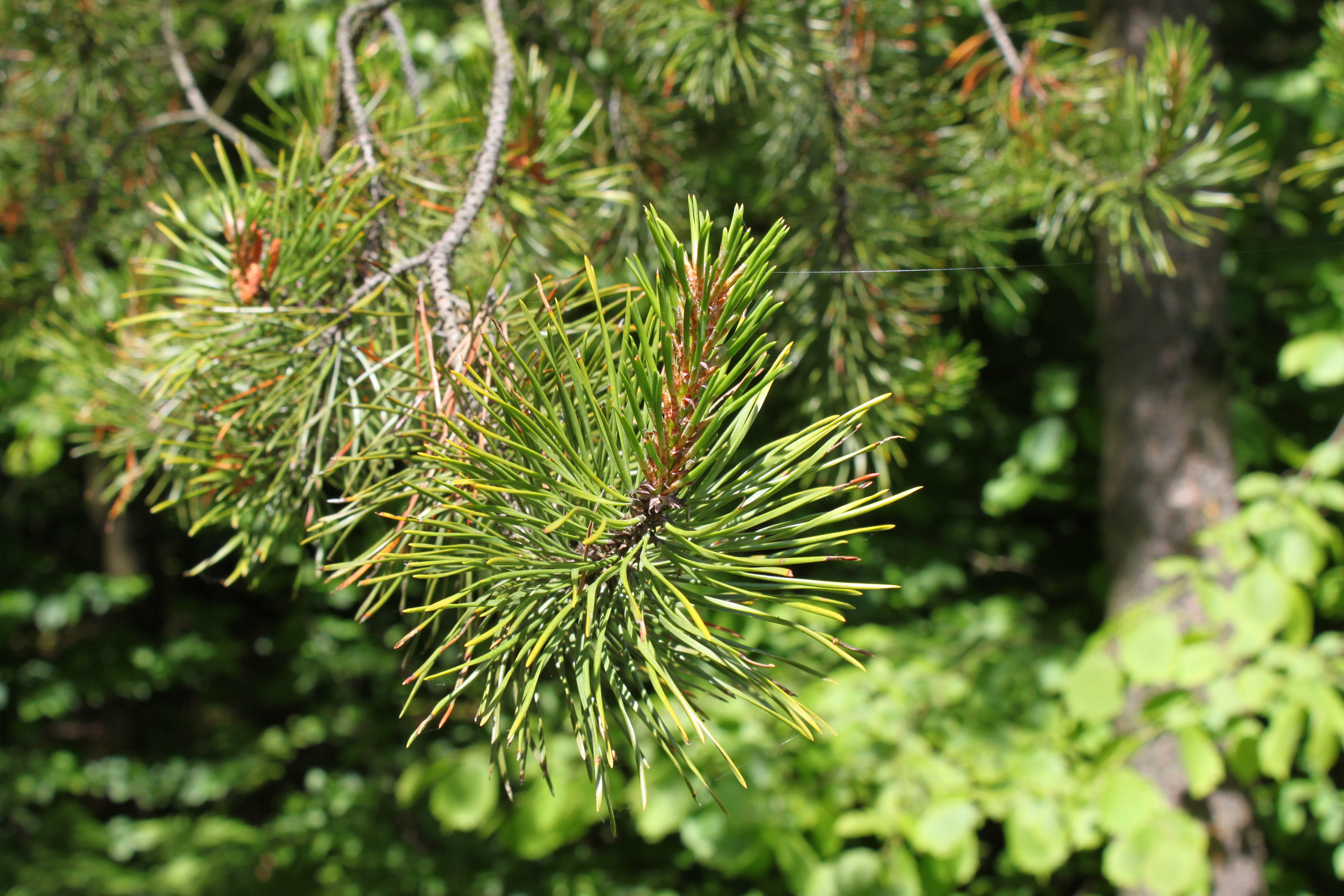
  • ▸Needles in pairs, short (5 to 8 cm), twisted and yellow-green
  • ▸Bark red-brown to dark, with fine curled flakes
  • ▸Small, lopsided, prickly cones that may stay closed on the tree for years
  • ▸Often crooked, poorly formed stems in British plantations, in dense pole stands on moorland
  • ▸Look-alike: Scots pine has blue-green needles of a similar length and orange, flaking upper bark; lodgepole is yellower and darker.

How to know it

Named for the poles North American peoples cut for their lodges and tipis, it was introduced to Britain in 1855

Lodgepole pine.

Its Latin name means twisted, for its paired yellow-green needles

Lodgepole pine. Pinus contorta.

Planted across deep peat in northern Scotland where little else would grow, now being removed to restore bog

Lodgepole pine.

It is resistant to winter cold, spring frost and exposure, so was used as a timber crop in the north

Lodgepole pine (Forestry England).

Wind-throw, poor stem form and red-band needle blight have made it unpopular with foresters

Lodgepole pine (Forest Research).

It has three recognised subspecies: shore pine, Sierra and Rocky Mountain forms

Lodgepole pine.

Quick-fire facts

  • •Pinus contorta — contorta means twisted, for the needles; the typical subspecies is the coastal shore pine
  • •Introduced to Britain in 1855 (Forestry England)
  • •Has three subspecies: contorta (shore pine), latifolia (lodgepole pine proper) and murrayana (Sierra lodgepole)
  • •Poor provenance choice in the past produced poor-form trees; widely planted on upland peats, which are now recognised as ecologically important, and removal is under way (Forest Research)
  • •Susceptible to Dothistroma needle blight, with significant mortality in some stands in eastern and northern Scotland (Forest Research)
  • •Fire-adapted in its native range
  • •Self-seeds onto open ground, which is a management concern on peatland restoration sites
  • •Categorised by Forest Research as a Principal tree species

Drill it — 6 cards

1 / 6new card

Sources