🪴 GoDeep
Search
← University Challenge
Portrait of Black poplar

Nature · Trees

Black poplar

Native · deciduous, to 30 m · one of Britain's rarest native trees · river floodplains and ditches

Populus nigra subsp. betulifolia — Salicaceae

The native black poplar is one of Britain's rarest timber trees, a big, burry, leaning tree of floodplains, ditches and damp fields in Shropshire, Cheshire, Somerset and East Anglia. The Forestry Commission, quoted by the Woodland Trust, calls it the most endangered native timber tree in Britain. Only about 7,000 wild trees remain, and only about 600 of them are female.

How to know it

Whole tree of Black poplar
Whole tree Dudley Miles · CC BY-SA 3.0
Leaf of Black poplar
Leaf Christian Fischer · CC BY-SA 3.0
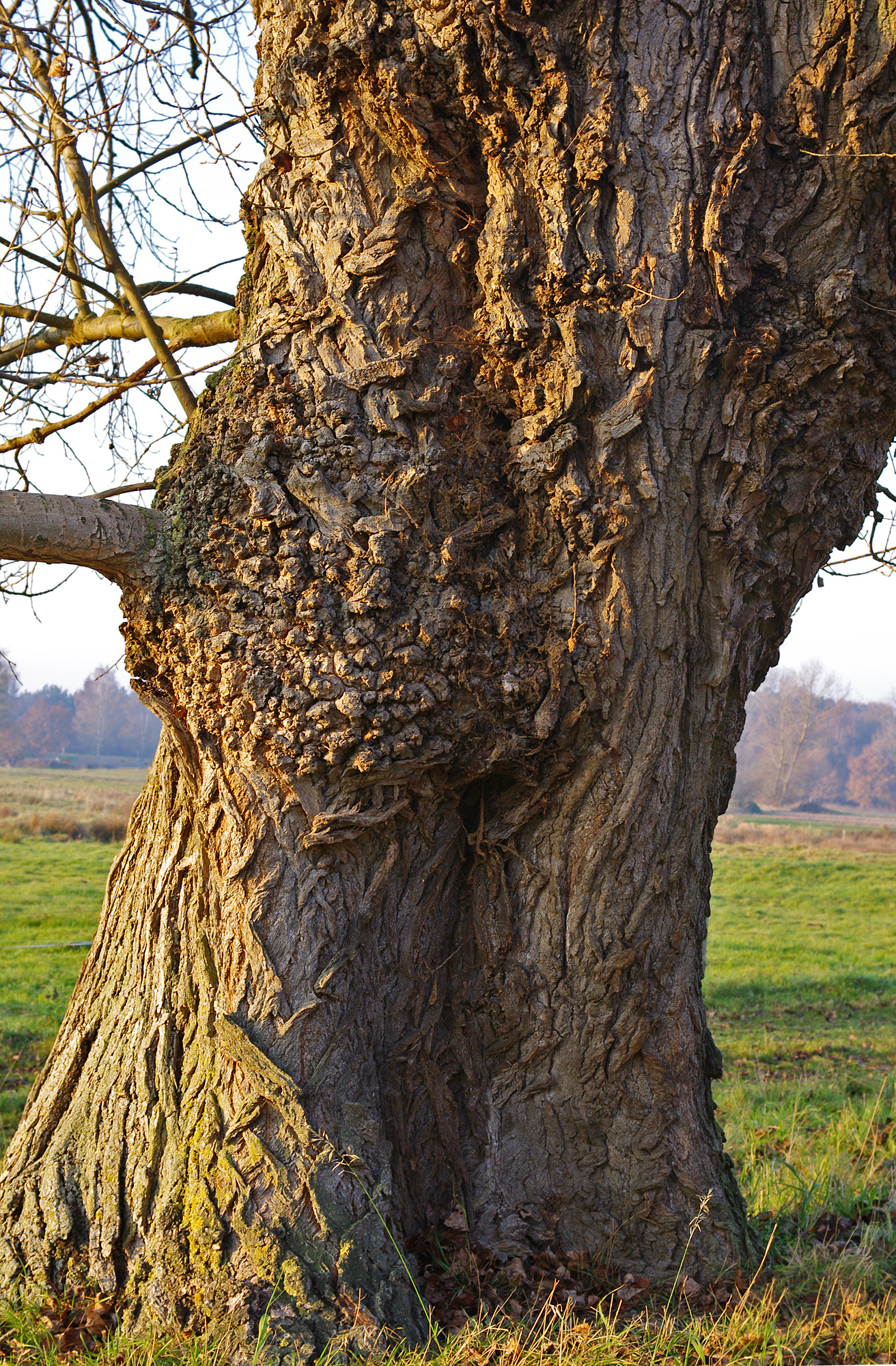
Bark of Black poplar
Bark Christian Fischer · CC BY-SA 3.0

How to spot them

  • ▸Dark, deeply fissured bark thick with burrs and swellings, looking black
  • ▸Heart-shaped shiny leaves with long tips, faintly balsam-scented
  • ▸Knobbly twigs on older trees; buds pressed close and spiralling
  • ▸Red male catkins ("Devil's fingers") and yellow-green female catkins on separate trees, opening before the leaves
  • ▸Cotton-like seeds in late summer; often leaning and growing in isolation

How to know it

Britain's most endangered native timber tree, with only about 7,000 wild trees and about 600 of them female

Black poplar — per the Woodland Trust.

A great burry-barked poplar of Shropshire, Cheshire and Somerset floodplains that leans and grows alone in damp fields

Black poplar.

Its fallen red male catkins are called Devil's fingers and bring bad luck if picked up

Black poplar.

In Greek myth, Phaethon's grieving sisters were turned into this tree

Black poplar.

Its soft, almost white, fire-resistant wood once made cart wheels, wagon bottoms and floorboards

Black poplar.

Native Populus nigra subsp. betulifolia; wild trees seldom regenerate because pollen comes mostly from planted hybrids

Black poplar.

Quick-fire facts

  • •Woodland Trust: only around 7,000 wild black poplars grow in Britain and only around 600 are female
  • •The Forestry Commission calls it the most endangered native timber tree in Britain
  • •It is dioecious: male and female catkins on separate trees, so scattered survivors rarely pollinate each other
  • •Cultivated and hybrid poplars pollinate the females, so true wild black poplars do not regenerate
  • •Most prevalent in Shropshire, Cheshire, Somerset and East Anglia, in boggy conditions by ditches and floodplains
  • •Trees can live about 200 years and reach 30 m
  • •Caterpillars of hornet, wood leopard, poplar hawk and figure of eight moths feed on it
  • •The wood is naturally fire-resistant and shock-resistant, so was used for floorboards in the days of paraffin lamps
  • •Lookalike: white poplar has rounded, lobed, white-backed leaves

Drill it — 7 cards

1 / 7new card

Sources