A knight writes two identical love letters and both women compare them
Mistress Ford and Mistress Page discover the duplicate letters and plot together
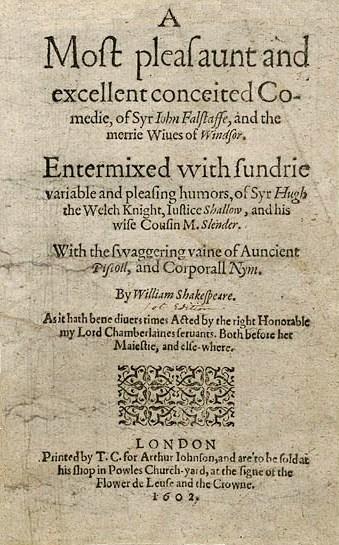
Shakespeare · Comedies
c. 1597–1602
Comedy — a citizen farce, borrowing its Falstaff from the Henry IV plays
Short of money, the fat knight Falstaff sends identical love letters to two respectable Windsor housewives, who compare notes and spend the play taking their revenge. He is carried out in a basket of dirty linen and tipped into the Thames, beaten while disguised as an old woman, and finally pinched by children dressed as fairies in Windsor Park. It is the only Shakespeare play set wholly in contemporary England, and almost all of it is in prose.
A knight writes two identical love letters and both women compare them
Mistress Ford and Mistress Page discover the duplicate letters and plot together
A suitor is tipped into the Thames in a basket of dirty washing
Falstaff hidden in the buck-basket and emptied into the muddy ditch at Datchet Mead
A jealous husband calls himself Brook and pays his rival to seduce his own wife
Frank Ford's disguise, which lets him hear every detail of the attempt
A man escapes a search disguised as the fat woman of Brentford and is beaten for a witch
Falstaff dressed as Mother Prat, Ford's second humiliation
A knight wears a stag's horns at an oak and is pinched by children playing fairies
The Herne the Hunter scene in Windsor Park, and the final exposure
A daughter elopes while two rival suitors carry off boys in green and in white
Anne Page marries Fenton while Slender and Doctor Caius are each fobbed off with a page
A Welsh parson and a French doctor are tricked into meeting for a duel in the wrong fields
The Host of the Garter sets Sir Hugh Evans and Doctor Caius against each other