'When icicles hang by the wall'
The song of Winter, the owl, that ends the play, paired with Spring and the cuckoo
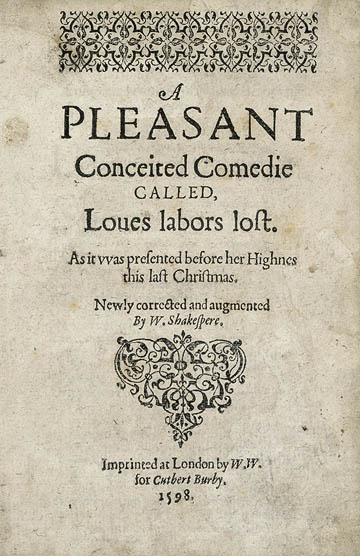
Shakespeare · Comedies
c. 1594–95
Comedy — no known narrative source; a courtly satire of fashionable learning and rhetoric
A king and three lords swear a three-year oath to study, fast and see no women, and an embassy of a princess and three ladies arrives the same afternoon. Each man forswears himself in secret, each is caught out, and the wooing collapses into wordplay, disguise and a botched pageant. Then a messenger brings news of a death, and the women impose a year's penance instead of marriage — the only Shakespeare comedy that refuses its own happy ending.
'When icicles hang by the wall'
The song of Winter, the owl, that ends the play, paired with Spring and the cuckoo
Four men are caught one by one reading their own love poems aloud
The overhearing scene, with Berowne up a tree watching the King, Longaville and Dumaine
Suitors disguise themselves as Muscovites to court masked ladies
The lords are outwitted when the women swap favours and each man woos the wrong one
'honorificabilitudinitatibus'
Costard's twenty-seven-letter word, the longest in Shakespeare, mocking Holofernes' Latin
A pedant, a curate, a braggart and a clown stage the Nine Worthies and are heckled off
Holofernes, Sir Nathaniel, Don Adriano de Armado and Costard, interrupted by news of a death
'The words of Mercury are harsh after the songs of Apollo'
The last line, spoken after the songs of the cuckoo and the owl
A Spanish braggart's letter about a clown caught with a dairymaid
Armado's absurdly ornate report to the King, the first comic set-piece