
The Birth of Venus (c. 1484–1486)
Uffizi Gallery, Florence
Venus arrives on a scallop shell, blown ashore by Zephyr
Image: Sandro Botticelli · Public domain, Wikimedia Commons

Art
c. 1445–1510 · Florentine (Italian)
Early Renaissance
Sandro Botticelli was a Florentine painter of the Early Renaissance, patronised by the Medici circle. His large mythological paintings, above all The Birth of Venus and Primavera, revived classical subjects on a scale unseen since antiquity and are among the most famous images in Western art.
The Birth of Venus (c. 1484–1486)
Uffizi Gallery, Florence
Venus arrives on a scallop shell, blown ashore by Zephyr
Image: Sandro Botticelli · Public domain, Wikimedia Commons
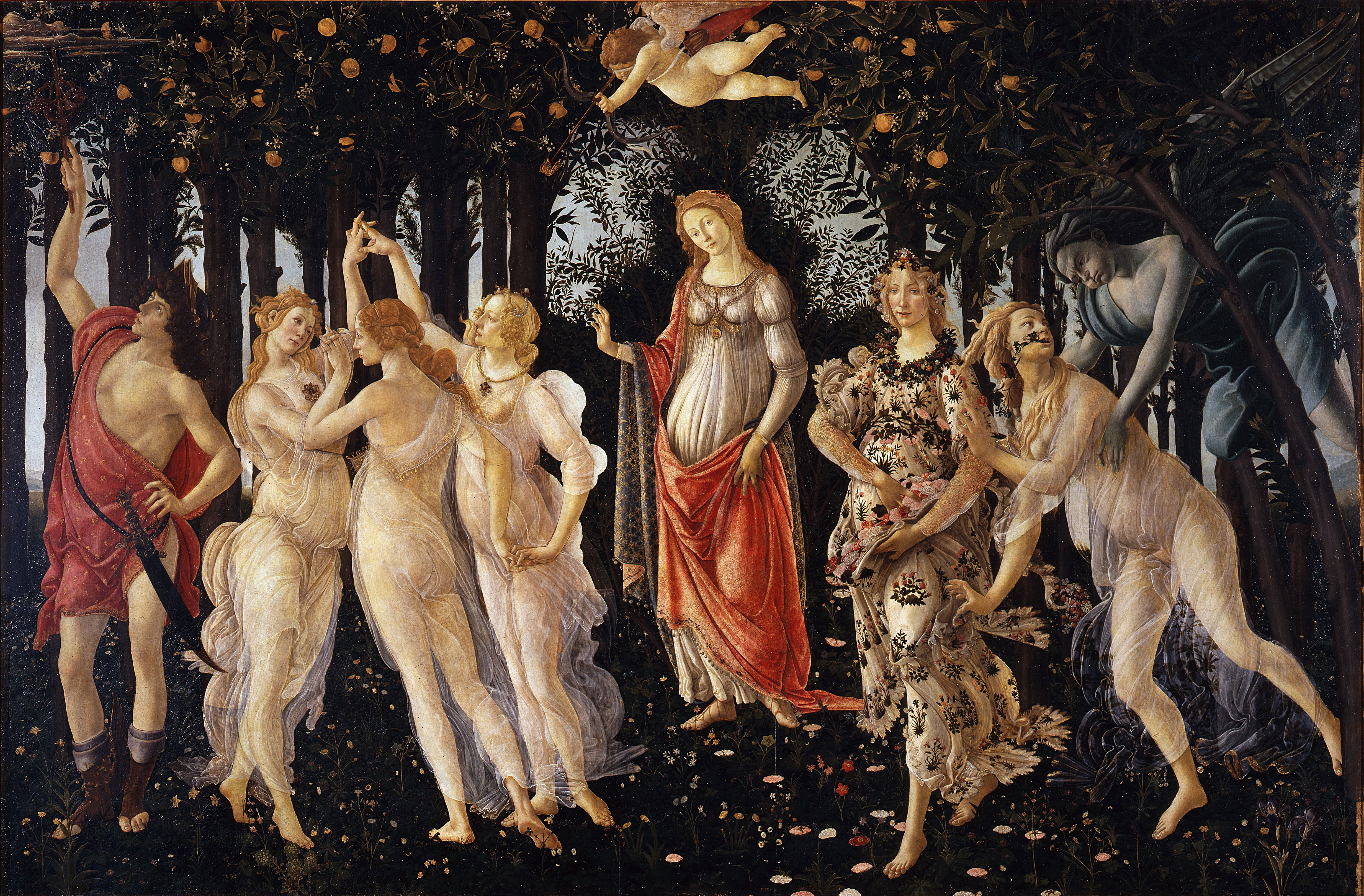
Primavera (c. 1477–1482)
Uffizi Gallery, Florence
Allegory of spring in an orange grove: Venus, the Three Graces, Mercury, Flora and Zephyr chasing Chloris
Image: Sandro Botticelli · Public domain, Wikimedia Commons

Venus and Mars (c. 1485)
National Gallery, London
Mars sleeps, disarmed by love, while baby satyrs play with his armour
Image: Sandro Botticelli · Public domain, Wikimedia Commons

The Mystical Nativity (c. 1500–1501)
National Gallery, London
His only signed and dated work, with an apocalyptic Greek inscription
Image: Sandro Botticelli · Public domain, Wikimedia Commons

Adoration of the Magi (c. 1475)
Uffizi Gallery, Florence
Includes members of the Medici family and a probable self-portrait gazing out at the viewer
Image: Sandro Botticelli · Public domain, Wikimedia Commons