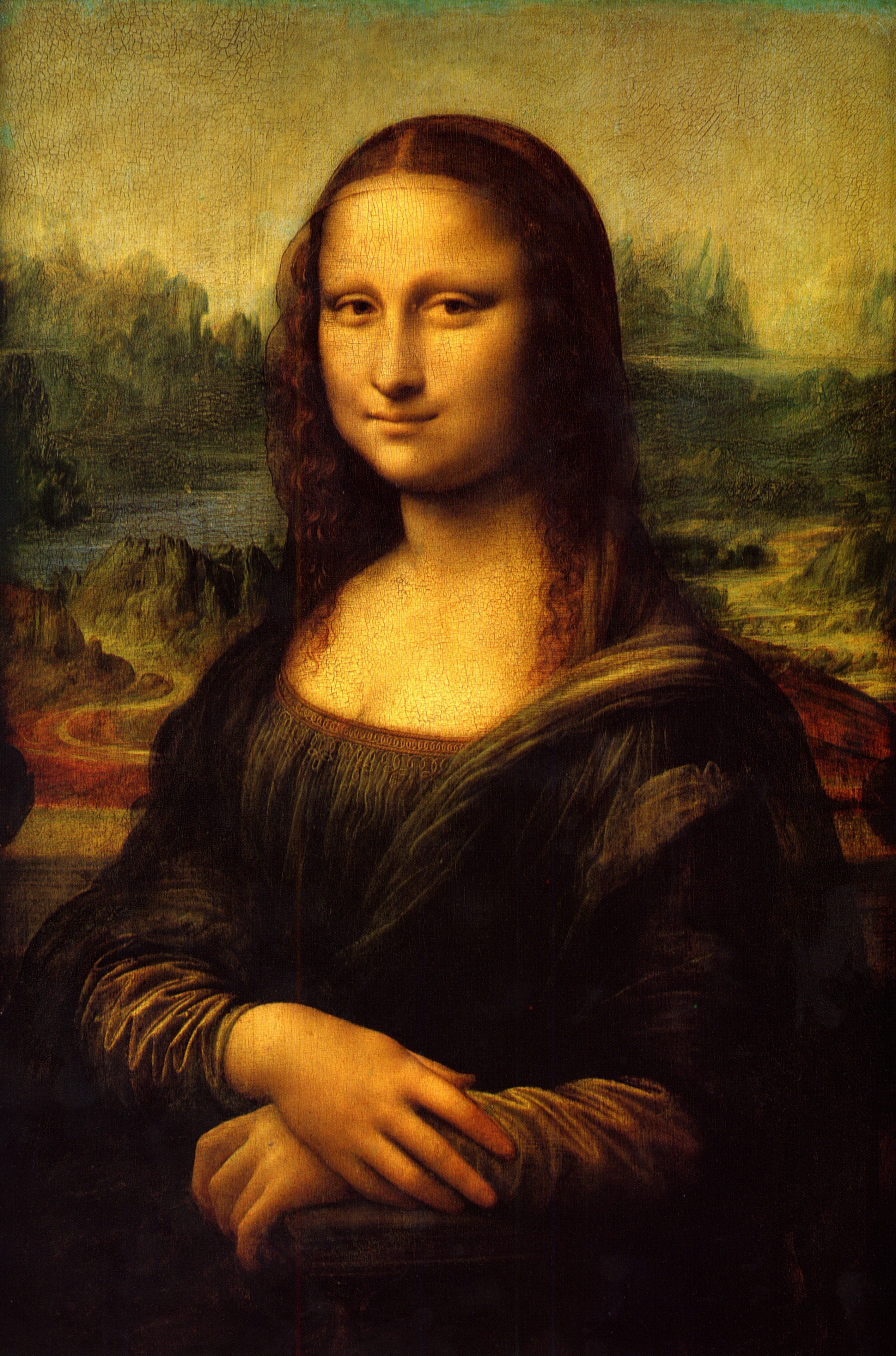
Mona Lisa (c. 1503–1519)
Louvre, Paris
Portrait of Lisa Gherardini (La Gioconda); stolen from the Louvre in 1911 by Vincenzo Peruggia
Image: Leonardo da Vinci · Public domain, Wikimedia Commons

Art
1452–1519 · Italian (Florentine)
High Renaissance
Leonardo da Vinci was the archetypal Renaissance polymath — painter, draughtsman, engineer, anatomist and inventor. Though few paintings survive, the Mona Lisa and The Last Supper are the most famous in the world, and his soft sfumato modelling transformed European painting.
Mona Lisa (c. 1503–1519)
Louvre, Paris
Portrait of Lisa Gherardini (La Gioconda); stolen from the Louvre in 1911 by Vincenzo Peruggia
Image: Leonardo da Vinci · Public domain, Wikimedia Commons

The Last Supper (c. 1495–1498)
Santa Maria delle Grazie, Milan
Mural in the convent refectory, painted in tempera on dry plaster, so it deteriorated quickly
Image: Leonardo da Vinci · Public domain, Wikimedia Commons

Lady with an Ermine (c. 1489–1491)
Czartoryski Museum, Kraków
Cecilia Gallerani, mistress of Ludovico Sforza; one of Poland's national treasures
Image: Leonardo da Vinci · Public domain, Wikimedia Commons

Vitruvian Man (c. 1490)
Gallerie dell'Accademia, Venice
Pen drawing of a man inscribed in a circle and a square, after the Roman architect Vitruvius
Image: Leonardo da Vinci · Public domain, Wikimedia Commons

Virgin of the Rocks (c. 1483–1486 (Louvre); c. 1495–1508 (London))
Louvre, Paris, and National Gallery, London
Two versions of the same composition exist
Image: Leonardo da Vinci · Public domain, Wikimedia Commons

Ginevra de' Benci (c. 1474–1480)
National Gallery of Art, Washington, D.C.
The only Leonardo painting on public view in the Americas; a juniper bush puns on her name
Image: Leonardo da Vinci · Public domain, Wikimedia Commons