🪴 GoDeep
Search
← University Challenge
Portrait of Smooth-leaved elm

Nature · Trees

Smooth-leaved elm

Native to southern England · deciduous, to 30 m · hedgerows, more resistant to Dutch elm disease

Ulmus minor — Ulmaceae

Smooth-leaved elm (also called field elm) is the native elm of southern England, a variable species whose leaves are smooth and glossy above, unlike the sandpapery leaves of English elm. It has some resistance to Dutch elm disease and still occurs in East Anglia and the far south. English elm is one of its many forms.

How to know it

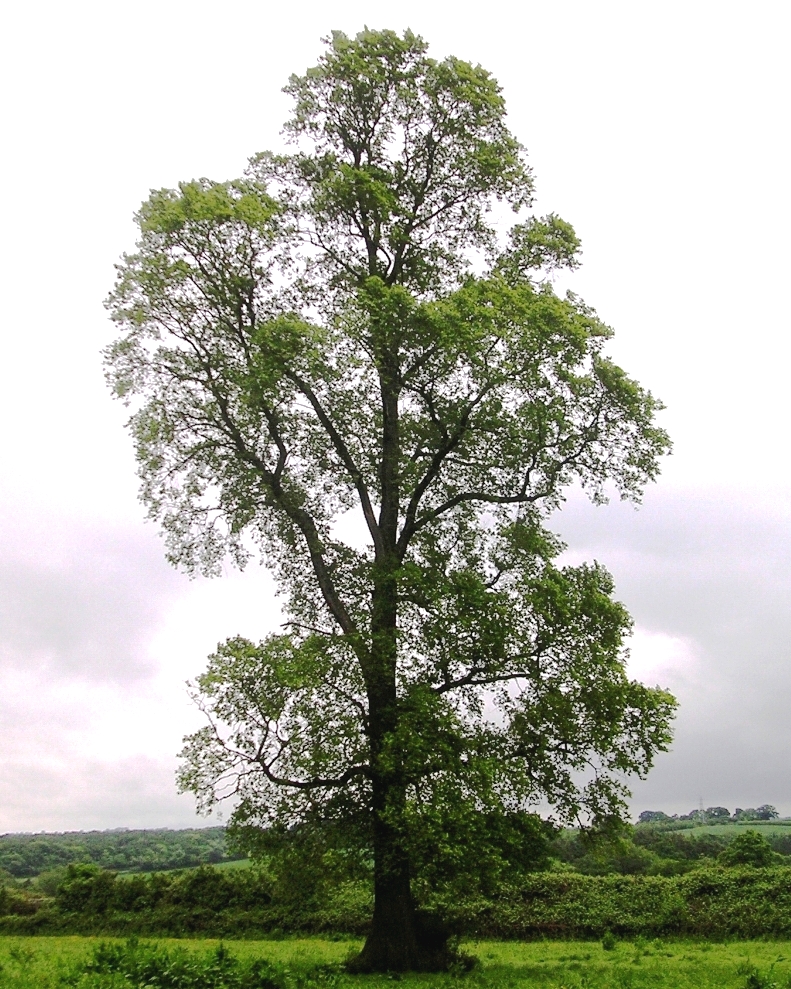
Whole tree of Smooth-leaved elm
Whole tree Ptelea · CC BY-SA 3.0
Leaf of Smooth-leaved elm
Leaf Ptelea at English Wikipedia · Public domain
Bark of Smooth-leaved elm
Bark Claudio Gioseffi · CC BY-SA 3.0

How to spot them

  • ▸Glossy, flat leaves smooth and leathery above, 6–15 cm, double-toothed with an asymmetric base and sudden point
  • ▸Grey-brown bark with crossing ridges
  • ▸Twigs sometimes with corky wings or ridges
  • ▸Dark pink-red flowers in tassels in February and March
  • ▸Highly variable; English elm is one of its distinct forms

How to know it

An elm with glossy leaves smooth to the touch, in contrast to rough-leaved cousins

Smooth-leaved elm (Ulmus minor), also called field elm.

Twigs sometimes bear corky wings or ridges, and bark shows crossing ridges

Smooth-leaved elm.

A variable native elm of southern England that has some resistance to Dutch elm disease and can reproduce well from seed

Smooth-leaved elm.

It survives best in East Anglia and the far south, and many towns once had water mains made of elm

Smooth-leaved elm — and elm in general.

The species of which English elm is one distinct form

Smooth-leaved elm.

Its native range in Britain is confined to southern England, unlike the wych elm of the north and west

Smooth-leaved elm.

Quick-fire facts

  • •Ulmus minor: minor means lesser
  • •Woodland Trust: native to much of Europe but only southern England within the UK
  • •It is somewhat resistant to Dutch elm disease, so many trees survive, notably in East Anglia and the far south
  • •Because it seeds better than other elms, some saplings show resistance, though it can still be killed
  • •Resistance varies with the disease strain and conditions
  • •English elm is one of many forms of this variable species (Woodland Trust)
  • •Before metal, many English towns including Bristol, Reading, Exeter, Southampton, Hull and Liverpool had elm water mains
  • •White-letter hairstreak caterpillars feed on elms; moths include peppered and light emerald

Drill it — 7 cards

1 / 7new card

Sources