🪴 GoDeep
Search
← University Challenge
Portrait of Leyland cypress

Nature · Trees

Leyland cypress

Neophyte (hybrid arose 1888) · evergreen conifer to 40 m · hedges and gardens

Cupressus × leylandii — Cupressaceae

The fast-growing hedge that launched a thousand neighbour disputes: a sterile hybrid between Monterey cypress and Nootka cypress that arose by accident at Leighton Hall near Welshpool, from cones collected in 1888. It exists only as planted, cloned trees, and as a result is not invasive. It can reach 40 m if left unclipped.

How to know it

Whole tree of Leyland cypress
Whole tree W.Baumgartner · CC BY-SA 3.0
Leaf of Leyland cypress
Leaf Wilhelm Zimmerling PAR · CC BY-SA 4.0
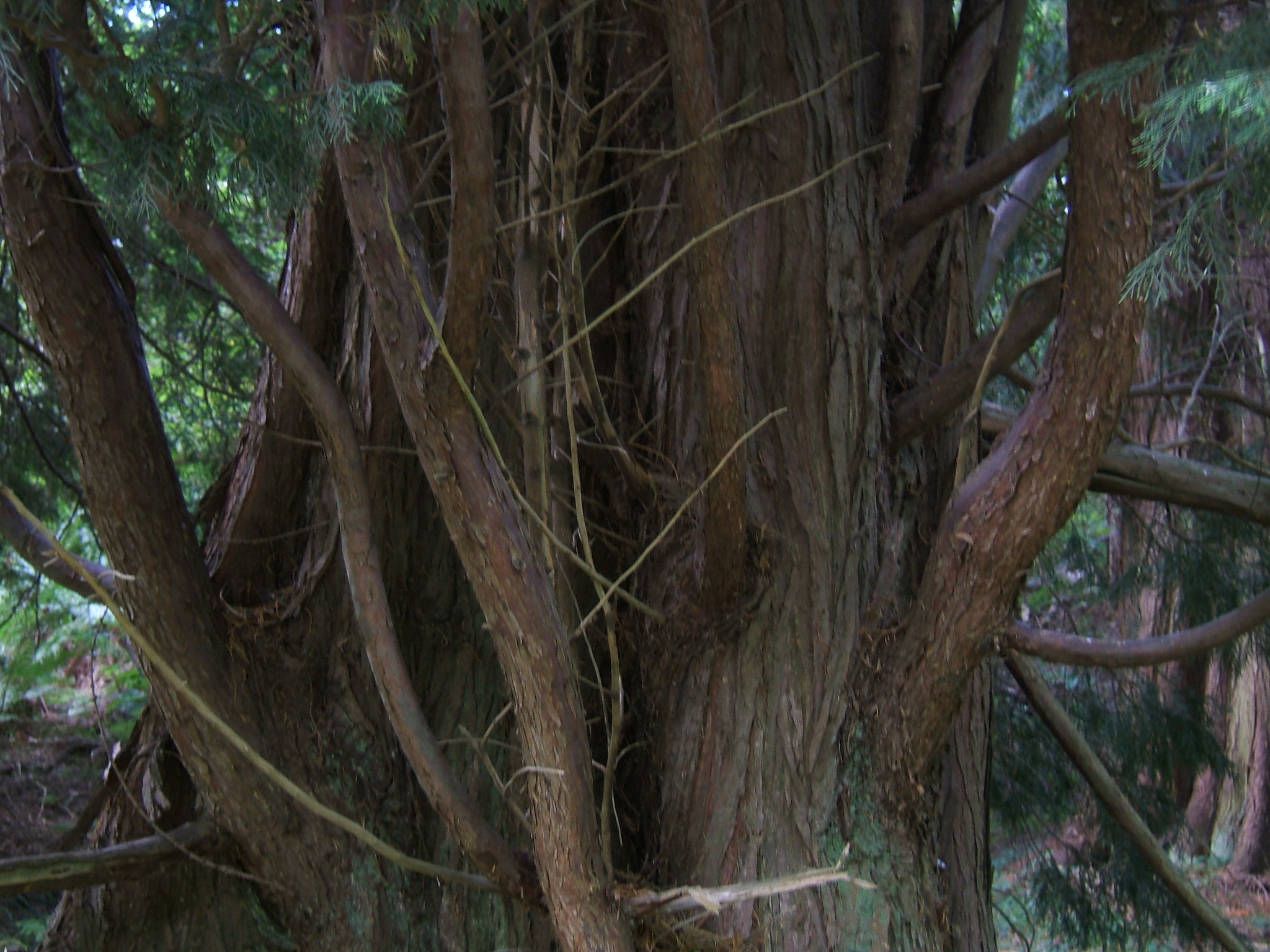
Bark of Leyland cypress
Bark MPF · Public domain

How to spot them

  • ▸Dense, feathery, dark green sprays of scale leaves that are not held in one flat plane
  • ▸No white markings beneath the foliage
  • ▸Crushed foliage smells of resin
  • ▸Rare small round brown cones with a central spine on each scale; pollen cones yellow at the shoot tips
  • ▸Red-grey ridged bark, hidden by dense foliage
  • ▸Look-alike: Lawson cypress has flat, drooping sprays, white markings beneath and a parsley smell; western red cedar smells fruity and has oval cones.

How to know it

A sterile hybrid that arose by accident in a Welsh garden from cones collected in 1888

Leyland cypress. Leighton Hall, Welshpool.

Its parents are two North American cypresses, Monterey and Nootka

Leyland cypress.

Fast-growing and bushy, it can reach 40 metres and became notorious for blocking neighbours' light

Leyland cypress. Cf. the High Hedges legislation.

Never found truly wild in Britain because the hybrid is sterile

Leyland cypress.

Feathery sprays not held in one flat plane and lacking white markings beneath separate it from a churchyard cypress

Leyland cypress, versus Lawson cypress.

Brown patches appear in summer on this hedging plant, caused by cypress aphid, scale insects or canker

Leyland cypress (Woodland Trust).

Quick-fire facts

  • •Cupressus × leylandii, now often placed in the hybrid genus Cuprocyparis; the parents are Cupressus macrocarpa (Monterey cypress) and Cupressus nootkatensis (Nootka cypress)
  • •Believed to have originated at Leighton Hall, Welshpool, from cones collected in 1888 (Forest Research)
  • •Sterile; found only as planted clones, so it is not an invasive species
  • •Widely grown as a garden hedge; growth often exceeds expectations, reaching 40 m and blocking light
  • •The High Hedges provisions of the Anti-social Behaviour Act 2003 let neighbours complain about evergreen hedges over 2 m
  • •Historically little use in forestry because of poor stem form (Forest Research)
  • •Brown patches can be caused by cypress aphid, scale insects, dieback, canker or over-enthusiastic clipping (Woodland Trust)
  • •Woodland Trust: shelter for garden birds, which often nest in it

Drill it — 7 cards

1 / 7new card

Sources