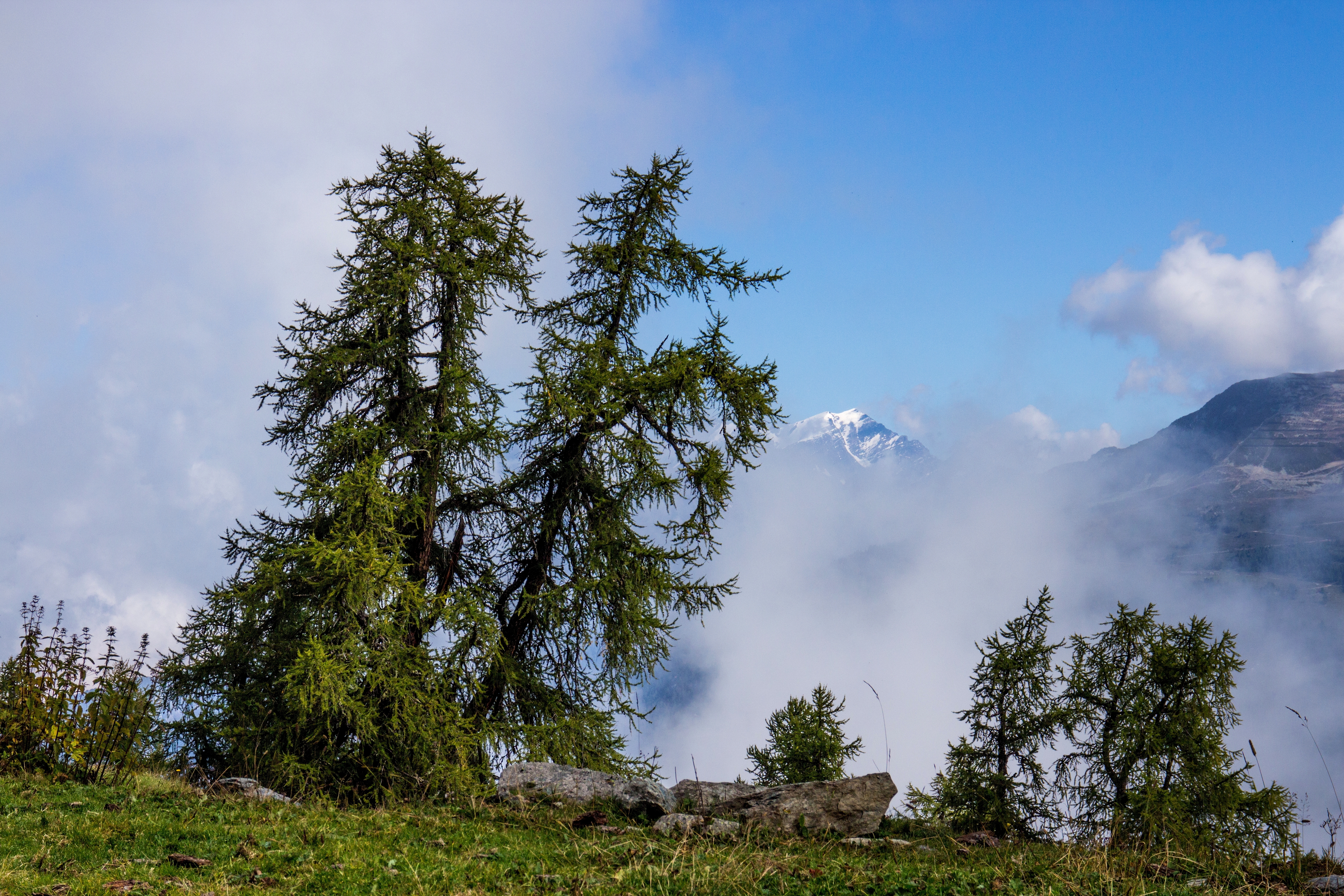
A conifer that drops every needle in autumn, going butter-yellow first and standing bare all winter
European larch — Larix decidua.

Nature · Trees
Deciduous conifer · to 45 m · introduced c. 1620
Larix decidua — Pinaceae
The larch is the conifer that behaves like a broadleaf: it drops all its needles in autumn, going butter-yellow before a winter of bare, pale, drooping twigs. Its soft needles grow in rosettes on short woody spurs, and its small upright cones sit like roses along the branch. The Dukes of Atholl planted it in millions in Perthshire.


A conifer that drops every needle in autumn, going butter-yellow first and standing bare all winter
European larch — Larix decidua.
Soft light needles borne in rosettes of thirty or more on short woody spurs along the branch
European larch.
Small upright egg-shaped cones sit along the twig for years, beside crimson spring flowers called roses
European larch. The Japanese species has cones with reflexed, rosette-like scales.
The Dukes of Atholl planted it by the million in Perthshire from the eighteenth century
European larch. The Dunkeld larch is the hybrid raised on that estate.
Phytophthora ramorum forced the felling of huge plantations of it in western Britain from 2009
European larch. The disease is often called sudden oak death, though larch is its main British host.
Its tough, resinous, rot-resistant timber went into boat planking, fence posts and pit props
European larch.