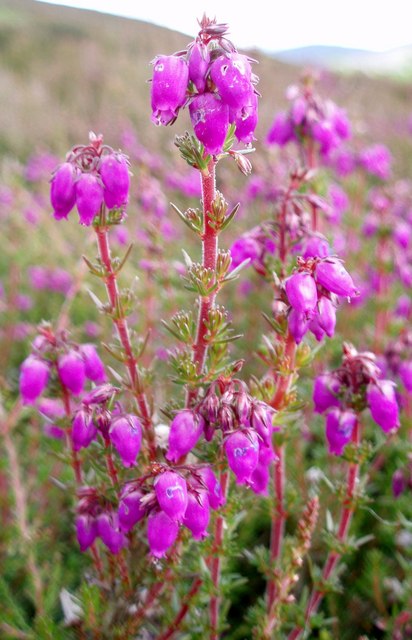
Vivid purple urn-shaped flowers in long spikes on a low heath shrub of dry slopes, flowering from July, with needle leaves in whorls of three
Bell heather — Erica cinerea.
Nature · Shrubs
Native · flowers Jul–Sep · dry heath and moor
Erica cinerea — Ericaceae
Bell heather is the deep purple-crimson heath of dry, well-drained slopes, flowering a few weeks before ordinary heather (ling) and often mixed through it. It is one of the three British heathers, and the easiest to tell from the other two by its bright urn-shaped bells and its leaves in whorls of three. It is most abundant in the north and west.
Vivid purple urn-shaped flowers in long spikes on a low heath shrub of dry slopes, flowering from July, with needle leaves in whorls of three
Bell heather — Erica cinerea.
The species name means 'ashy-grey', but the flowers are among the deepest purples on British heathland
Bell heather — cinerea, from Latin cinereus.
Of Britain's three heathers, this is the one whose leaves come in threes and whose flowers open earliest
Bell heather, ahead of ling and cross-leaved heath.
Hives of honey bees are moved to the hills in July to feed on it for a dark upland honey
Bell heather, often mixed with ling in heather honey.
It thrives on cut-over peat banks and dry stony slopes, and is far commoner in the north and west than in the English Midlands and east
Bell heather — Erica cinerea.
Unlike its wet-heath cousin, its small flowers are strung up the stem rather than clustered on one side at the tip
Bell heather versus cross-leaved heath.