Quantum hypothesis: energy emitted in discrete quanta (1900)
Presented to the German Physical Society on 14 December 1900, the birth of quantum theory
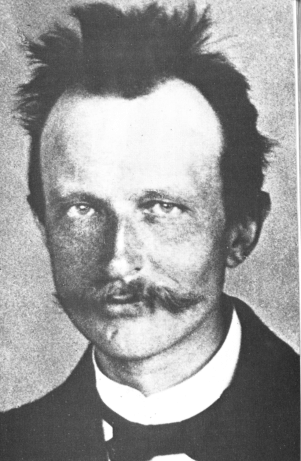
Science · Physics
1858–1947 · German
Theoretical physics; thermodynamics and quantum theory
Max Planck, born in Kiel, founded quantum theory in 1900 when, to explain black-body radiation, he proposed that energy is emitted in discrete packets (quanta) proportional to frequency. The constant h in E = hν bears his name. He won the 1918 Nobel Prize in Physics and was the elder statesman of German science through two world wars.
Quantum hypothesis: energy emitted in discrete quanta (1900)
Presented to the German Physical Society on 14 December 1900, the birth of quantum theory
Black-body radiation law (1900)
Formula correctly describing the spectrum of radiation from a hot body at all frequencies
Natural units of length, mass, time and temperature (1899)
Units built from fundamental constants, e.g. the Planck length
Treatise on Thermodynamics (1897)
Influential textbook reflecting his early work on entropy
Scientific Autobiography (1948 (posthumous))
Contains his remark that new scientific truths win because opponents eventually die