A 1977 opera on the rivalry between a returning Scottish queen, her half-brother and Bothwell, given at the Edinburgh Festival (1977)
Mary, Queen of Scots — her best-known opera, premiered at the Edinburgh International Festival by Scottish Opera
Music
born 1928 · Scottish
Contemporary — dramatic-abstract concertos and historical opera
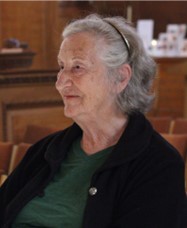
Thea Musgrave is a Scottish composer, still working in her late nineties, best known for operas on historical subjects and for concertos she calls "dramatic-abstract", in which soloists stand up, move about the platform and behave like characters in a drama. She studied in Paris with Nadia Boulanger, has lived in the United States since 1972, and has consistently rejected being described as a woman composer rather than a composer.
A 1977 opera on the rivalry between a returning Scottish queen, her half-brother and Bothwell, given at the Edinburgh Festival (1977)
Mary, Queen of Scots — her best-known opera, premiered at the Edinburgh International Festival by Scottish Opera
A 1984 opera about the conductor of the Underground Railroad, who led enslaved people north to freedom (1984)
Harriet, the Woman Called Moses — on the life of Harriet Tubman, premiered by Virginia Opera
A 1967 concerto in which the conductor falls silent and the orchestra's players take over, led by a rebellious first clarinet (1967)
Concerto for Orchestra — the piece that established her 'dramatic-abstract' method
A 1969 concerto whose soloist wanders the platform, drawing answering phrases from players in different sections (1969)
Clarinet Concerto, written for Gervase de Peyer and the BBC
A 1971 concerto in which the orchestra's four horns are stationed around the hall and rise to their feet to answer the soloist (1971)
Horn Concerto, written for Barry Tuckwell and the Scottish National Orchestra
A 1974 Aldeburgh opera after a Henry James story, in which an excavated antique statue speaks to an Italian count (1974)
The Voice of Ariadne, after James's 'The Last of the Valerii'
A 1992 opera about the liberator of Venezuela, Colombia, Ecuador, Peru and the country named after him (1992)
Simón Bolívar, premiered by Virginia Opera in 1995
A suite of six orchestral movements, each after a painting by J. M. W. Turner (2003)
Turbulent Landscapes — one of her most played orchestral works