The Love Song of J. Alfred Prufrock (1915)
Dramatic monologue of a timid, ageing man; published in Poetry magazine and in Prufrock and Other Observations (1917)
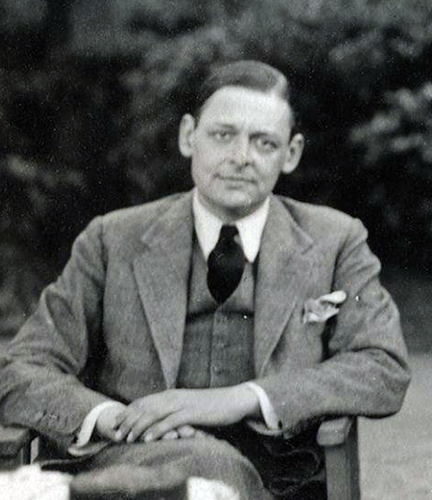
Literature · Poets
1888–1965 · American-born British
Modernism
Thomas Stearns Eliot, born in St Louis, Missouri, settled in England and became the central poet and critic of Anglo-American modernism. "The Love Song of J. Alfred Prufrock" and The Waste Land transformed English poetry with their fragmented, allusive style, while his later Four Quartets reflect his Anglican faith. He also wrote verse dramas such as Murder in the Cathedral and won the Nobel Prize in Literature in 1948.
The Love Song of J. Alfred Prufrock (1915)
Dramatic monologue of a timid, ageing man; published in Poetry magazine and in Prufrock and Other Observations (1917)
The Waste Land (1922)
Fragmented five-part modernist poem of post-war spiritual desolation, edited by Ezra Pound
The Hollow Men (1925)
Bleak poem ending with the world closing 'Not with a bang but a whimper'
Ash-Wednesday (1930)
His first major poem after joining the Church of England, on spiritual struggle and conversion
Murder in the Cathedral (1935)
Verse drama on the martyrdom of Thomas Becket, first staged in Canterbury Cathedral chapter house
Old Possum's Book of Practical Cats (1939)
Light verse featuring Macavity, Growltiger and others; adapted by Andrew Lloyd Webber as Cats (1981)
Four Quartets (1943)
Burnt Norton, East Coker, The Dry Salvages and Little Gidding: meditations on time and faith
The Cocktail Party (1949)
Verse comedy with a religious theme, a West End and Broadway success