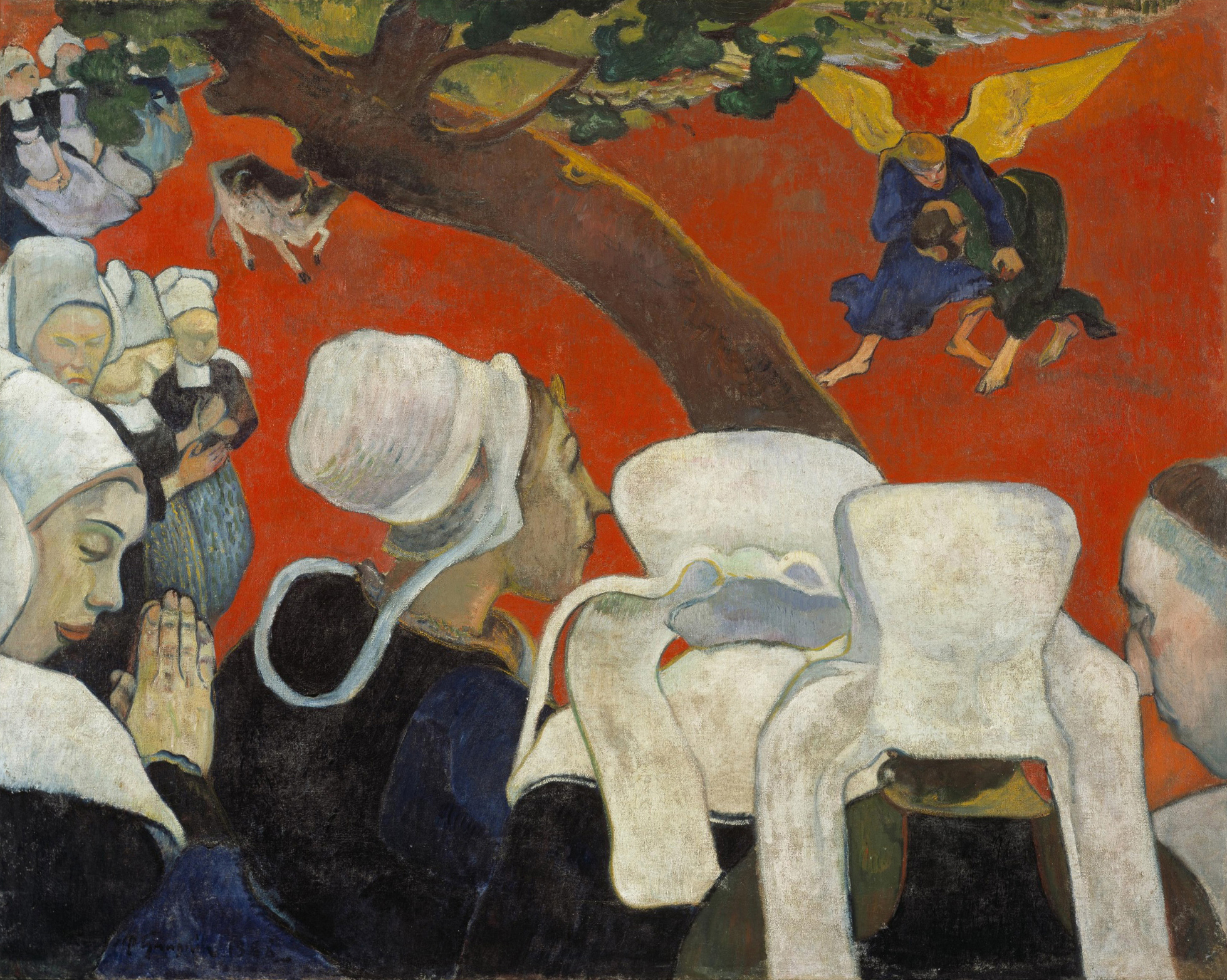
Vision after the Sermon (1888)
Scottish National Gallery, Edinburgh
Breton women see Jacob wrestling the angel on a flat red field; a Synthetist landmark
Image: Paul Gauguin · Public domain, Wikimedia Commons

Art
1848–1903 · French
Post-Impressionism / Synthetism
A former stockbroker who became a full-time painter, Gauguin rejected naturalism for flat areas of bold, symbolic colour. After working in Brittany and briefly with Van Gogh in Arles, he left for Tahiti and later the Marquesas, whose people he painted.
Vision after the Sermon (1888)
Scottish National Gallery, Edinburgh
Breton women see Jacob wrestling the angel on a flat red field; a Synthetist landmark
Image: Paul Gauguin · Public domain, Wikimedia Commons

The Yellow Christ (1889)
Buffalo AKG Art Museum, Buffalo, New York
Yellow crucified Christ in a Breton autumn landscape near Pont-Aven
Image: Paul Gauguin · Public domain, Wikimedia Commons
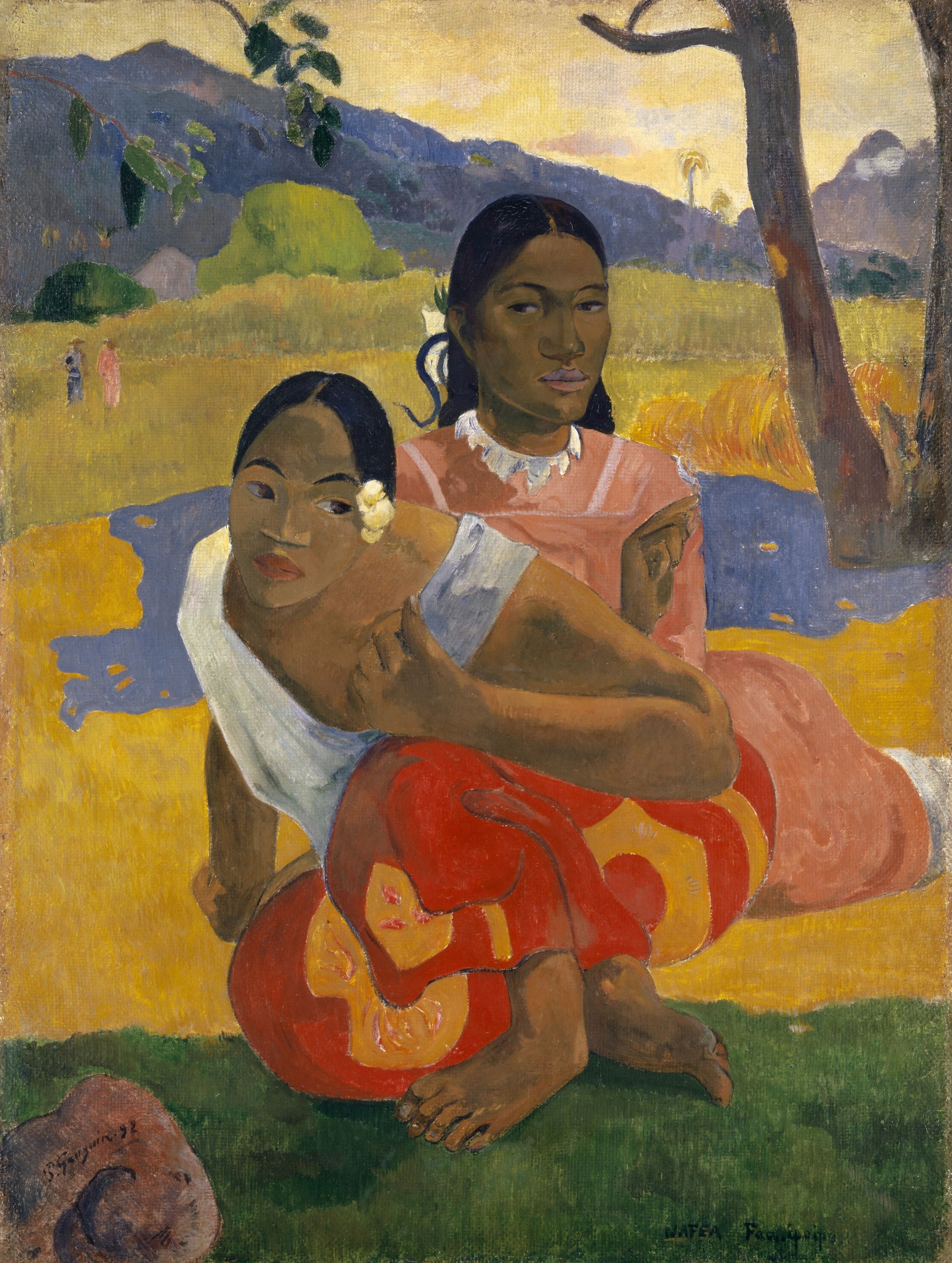
When Will You Marry? (1892)
Private collection (sold to Qatar in 2015)
Two Tahitian women; reportedly sold for close to $210 million
Image: Paul Gauguin · Public domain, Wikimedia Commons

Nevermore (1897)
Courtauld Gallery, London
Reclining Tahitian nude, a raven on the sill; title from Edgar Allan Poe's poem
Image: Paul Gauguin · Public domain, Wikimedia Commons

Where Do We Come From? What Are We? Where Are We Going? (1897–1898)
Museum of Fine Arts, Boston
Vast philosophical frieze of life from birth to death, read right to left
Image: Paul Gauguin · Public domain, Wikimedia Commons

Two Tahitian Women (1899)
Metropolitan Museum of Art, New York
Two bare-breasted women, one holding mango blossoms
Image: Paul Gauguin · Public domain, Wikimedia Commons