
Impression, Sunrise (1872)
Musée Marmottan Monet, Paris
Hazy orange sun over the port of Le Havre; shown in 1874, it gave Impressionism its name
Image: Claude Monet · Public domain, Wikimedia Commons

Art
1840–1926 · French
Impressionism
The founding figure of Impressionism, whose Impression, Sunrise gave the movement its name. He devoted his life to painting light and atmosphere out of doors, above all in series of a single motif and in the water garden at his home in Giverny.
Impression, Sunrise (1872)
Musée Marmottan Monet, Paris
Hazy orange sun over the port of Le Havre; shown in 1874, it gave Impressionism its name
Image: Claude Monet · Public domain, Wikimedia Commons

Woman with a Parasol – Madame Monet and Her Son (1875)
National Gallery of Art, Washington, D.C.
Camille and son Jean on a windy hillside at Argenteuil, seen from below
Image: Claude Monet · Public domain, Wikimedia Commons

Gare Saint-Lazare (series) (1877)
Various, including the Musée d'Orsay, Paris
Steam-filled Paris railway station; his first series on a single theme
Image: Claude Monet · Public domain, Wikimedia Commons
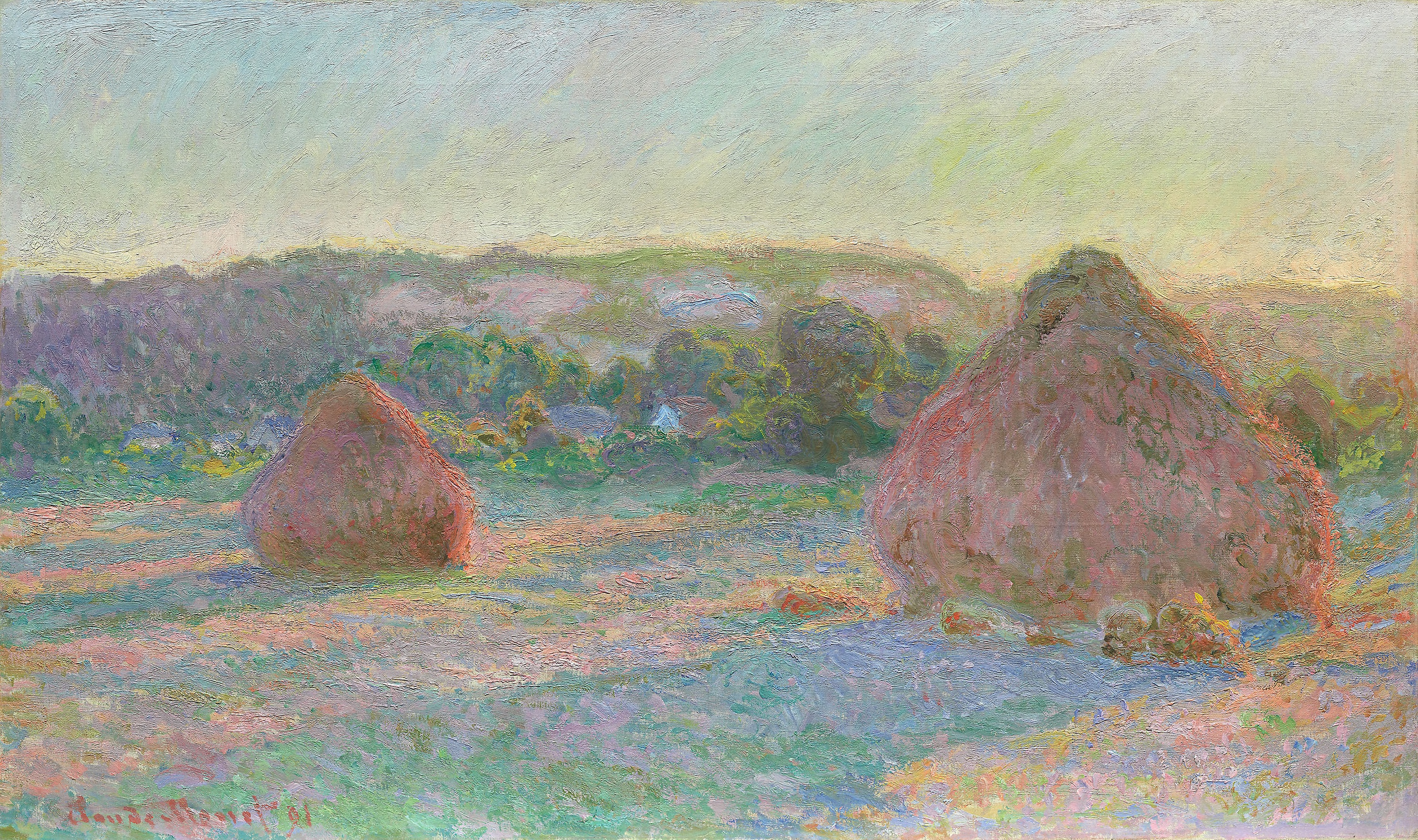
Haystacks (series) (1890–1891)
Various, including the Art Institute of Chicago and Musée d'Orsay
Stacks of wheat near Giverny at different times of day and season
Image: Claude Monet · Public domain, Wikimedia Commons

Rouen Cathedral (series) (1892–1894)
Various, including five in the Musée d'Orsay, Paris
The Gothic façade dissolving in light at different hours
Image: Claude Monet · Public domain, Wikimedia Commons

Water Lilies (series) (c. 1896–1926)
Various; the vast Grandes Décorations are in the Musée de l'Orangerie, Paris
About 250 canvases of his Giverny lily pond, many painted while he had cataracts
Image: Claude Monet · Public domain, Wikimedia Commons