
Wanderer above the Sea of Fog (c. 1818)
Hamburger Kunsthalle, Hamburg
A man in a dark coat stands on a rocky summit above a sea of mist – the icon of Romanticism
Image: Caspar David Friedrich · Public domain, Wikimedia Commons

Art
1774–1840 · German
Romanticism
Caspar David Friedrich was the leading painter of German Romanticism, based for most of his career in Dresden. His silent, spiritual landscapes – lone figures seen from behind, gazing at fog, moonlight or the sea – express awe before nature and the sublime, and made Wanderer above the Sea of Fog an emblem of the Romantic age.
Wanderer above the Sea of Fog (c. 1818)
Hamburger Kunsthalle, Hamburg
A man in a dark coat stands on a rocky summit above a sea of mist – the icon of Romanticism
Image: Caspar David Friedrich · Public domain, Wikimedia Commons
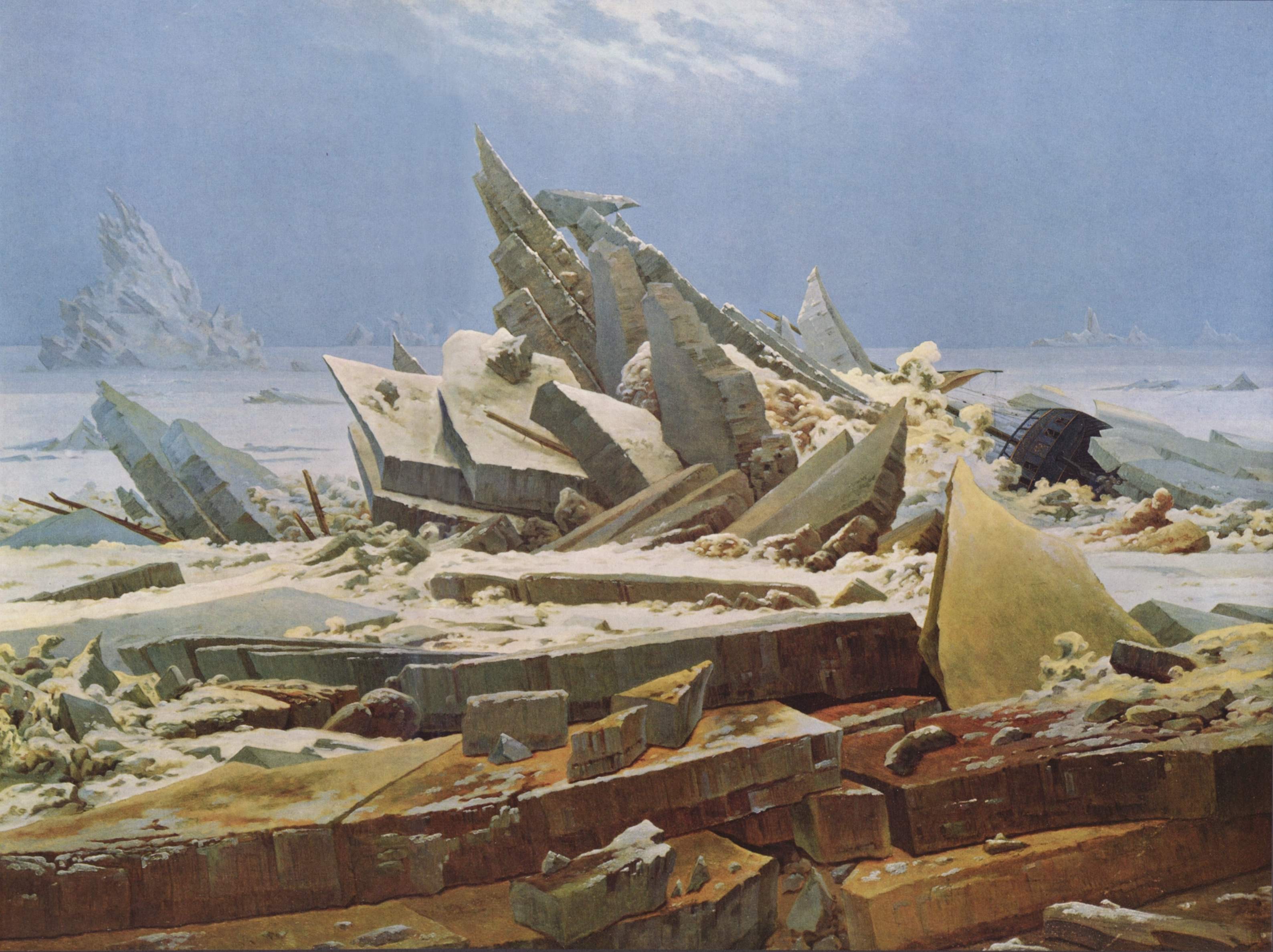
The Sea of Ice (1823–1824)
Hamburger Kunsthalle, Hamburg
Shards of Arctic ice crushing a wrecked ship
Image: Caspar David Friedrich · Public domain, Wikimedia Commons
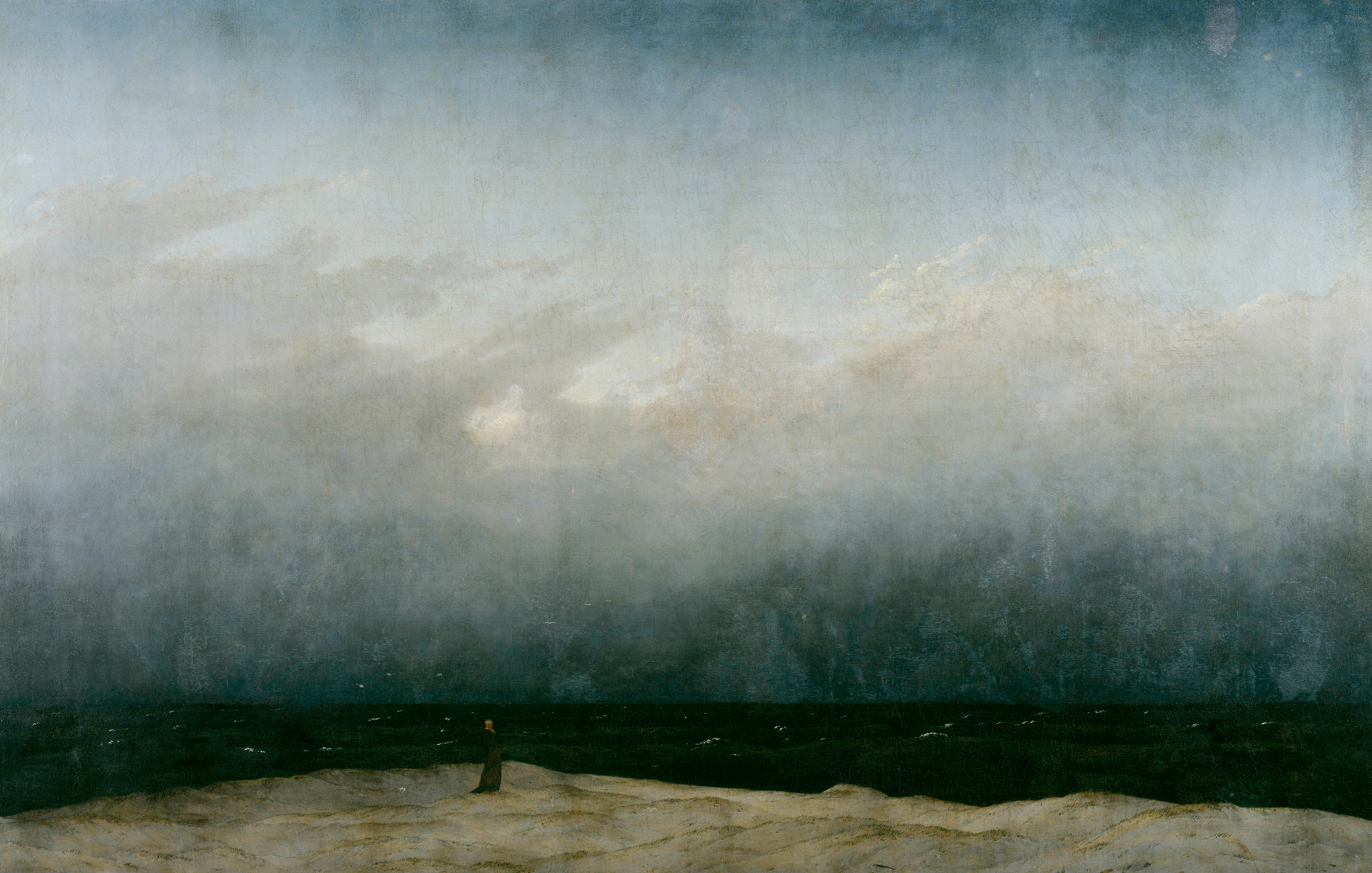
The Monk by the Sea (1808–1810)
Alte Nationalgalerie, Berlin
A tiny monk before an immense empty sea and sky; companion to The Abbey in the Oakwood
Image: Caspar David Friedrich · Public domain, Wikimedia Commons
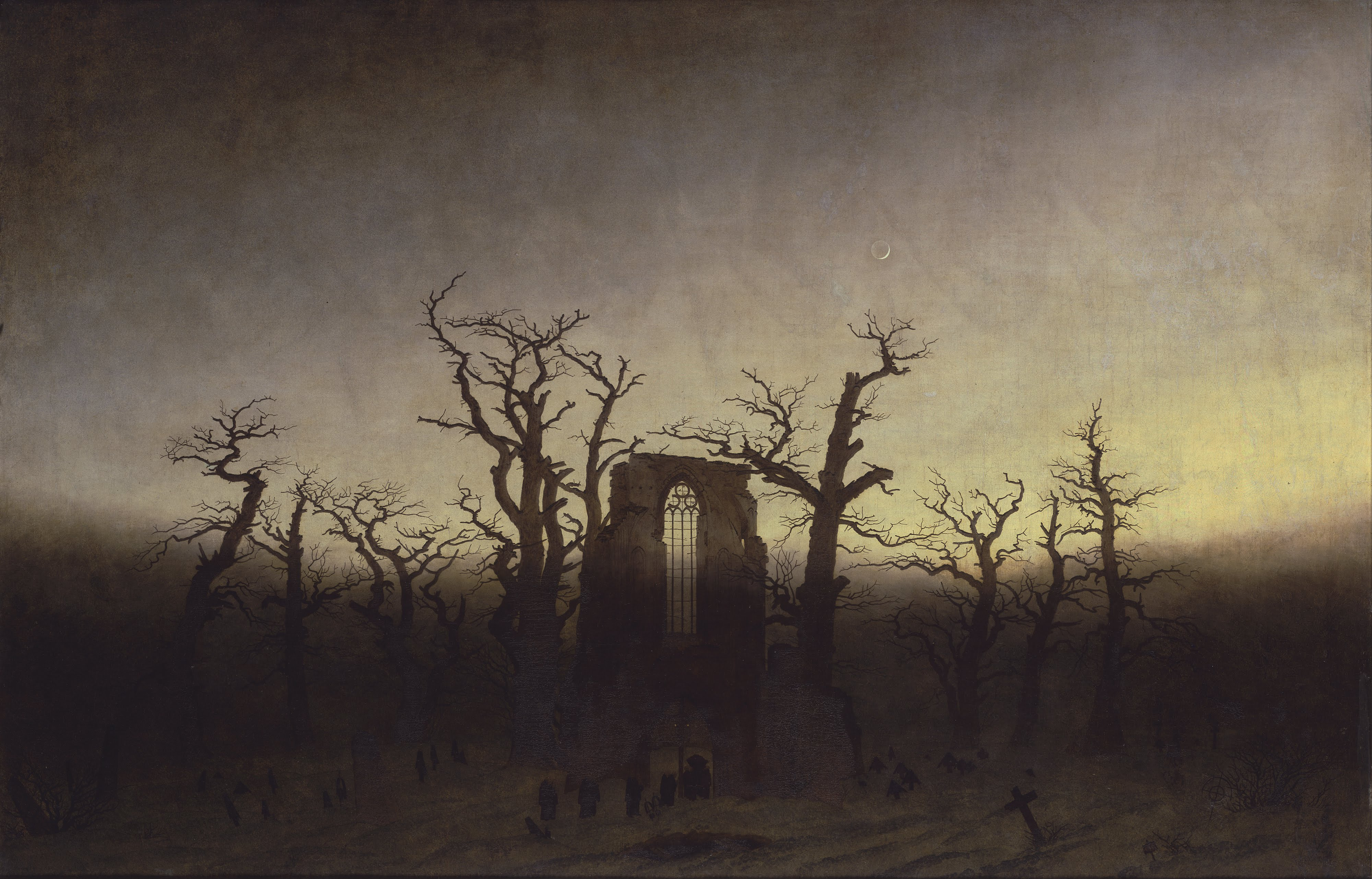
The Abbey in the Oakwood (1809–1810)
Alte Nationalgalerie, Berlin
Monks carry a coffin past a ruined Gothic abbey among leafless oaks
Image: Caspar David Friedrich · Public domain, Wikimedia Commons

Chalk Cliffs on Rügen (c. 1818)
Museum Oskar Reinhart, Winterthur
Three figures peer over white cliffs on the Baltic island of Rügen, associated with his honeymoon
Image: Caspar David Friedrich · Public domain, Wikimedia Commons

Two Men Contemplating the Moon (1819–1820)
Galerie Neue Meister, Dresden
Two figures from behind watching a crescent moon; Samuel Beckett cited it as a source for Waiting for Godot
Image: Caspar David Friedrich · Public domain, Wikimedia Commons