Self-Portrait at Twenty-Eight (1500)
Alte Pinakothek, Munich
Frontal, symmetrical pose deliberately recalling images of Christ
No free image available (likely still in copyright) · see it on Wikipedia

Art
1471–1528 · German
Northern Renaissance
Albrecht Dürer of Nuremberg was the greatest artist of the German Renaissance, bringing Italian ideas of proportion and perspective north after visits to Venice. A painter, theorist and above all a supreme printmaker, his engravings and woodcuts spread his fame across Europe in his lifetime.
Self-Portrait at Twenty-Eight (1500)
Alte Pinakothek, Munich
Frontal, symmetrical pose deliberately recalling images of Christ
No free image available (likely still in copyright) · see it on Wikipedia

Young Hare (1502)
Albertina, Vienna
Watercolour and bodycolour study of astonishing realism; a window is reflected in the hare's eye
Image: Albrecht Dürer · Public domain, Wikimedia Commons
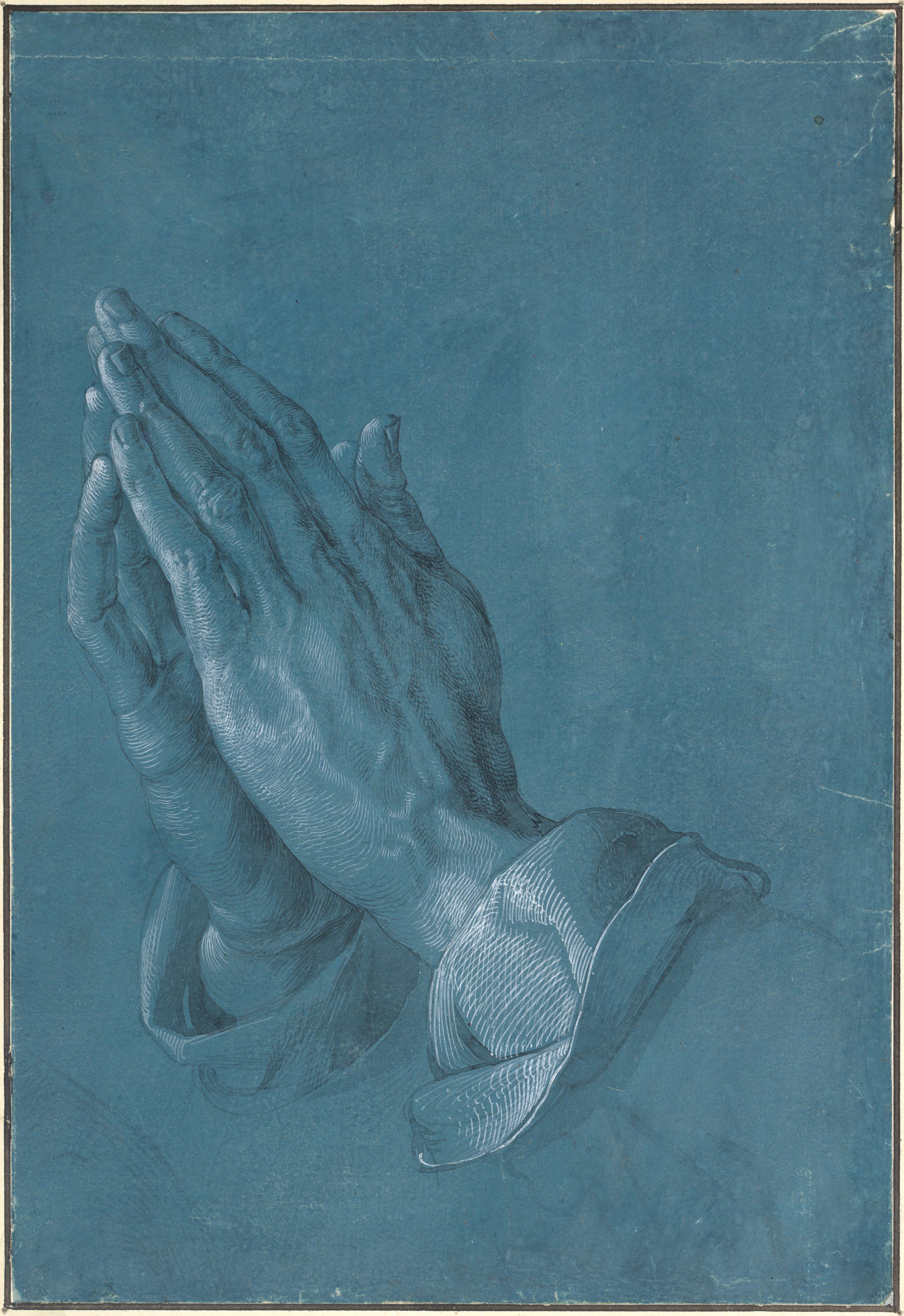
Praying Hands (c. 1508)
Albertina, Vienna
Study for an apostle's hands in the lost Heller Altarpiece
Image: Albrecht Dürer · Public domain, Wikimedia Commons
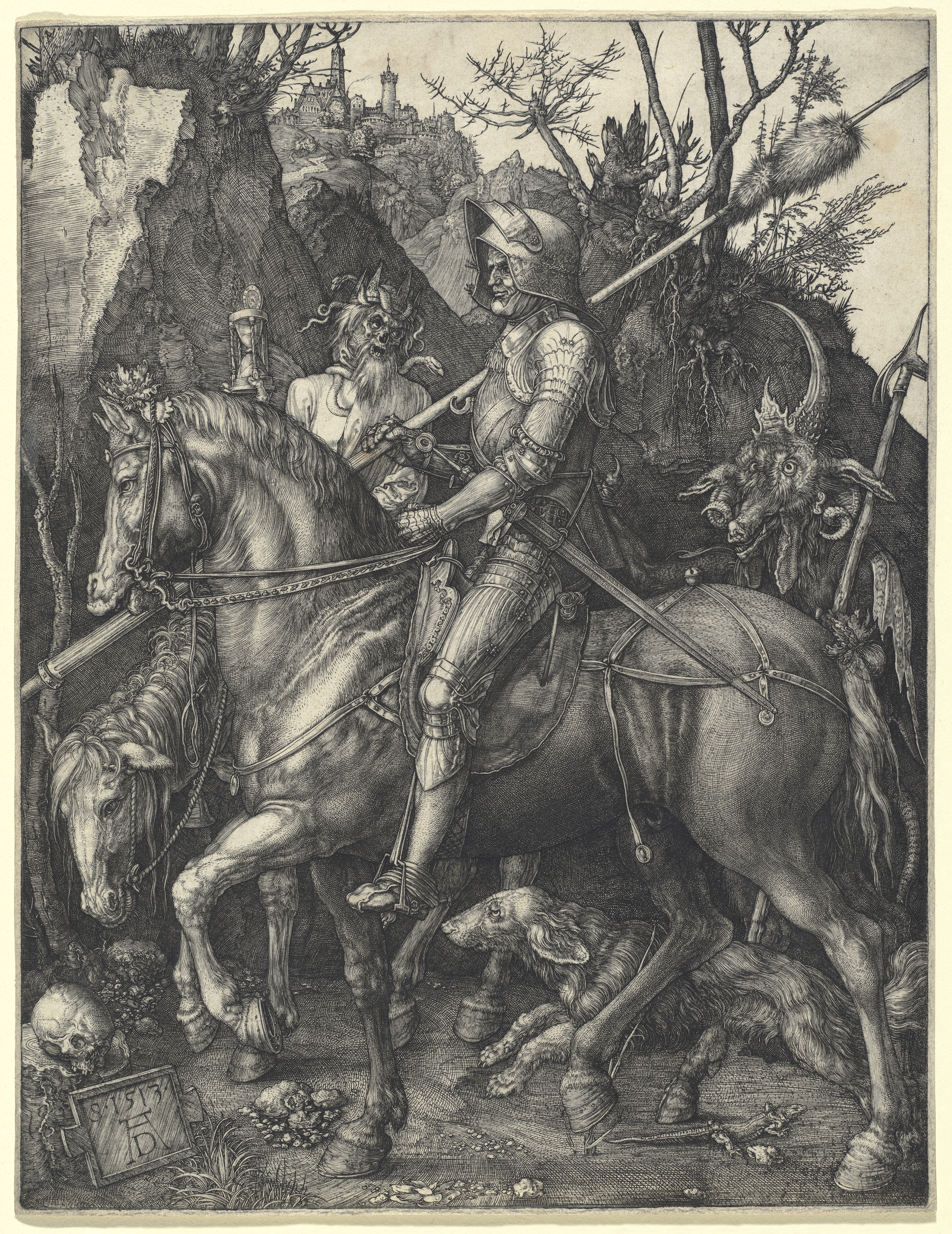
Knight, Death and the Devil (1513)
Engraving; impressions in many collections
First of the three Meisterstiche (master prints)
Image: Albrecht Dürer · CC0, Wikimedia Commons

Melencolia I (1514)
Engraving; impressions in many collections
Brooding winged figure with a magic square whose bottom row includes the date 1514
Image: Albrecht Dürer · Public domain, Wikimedia Commons
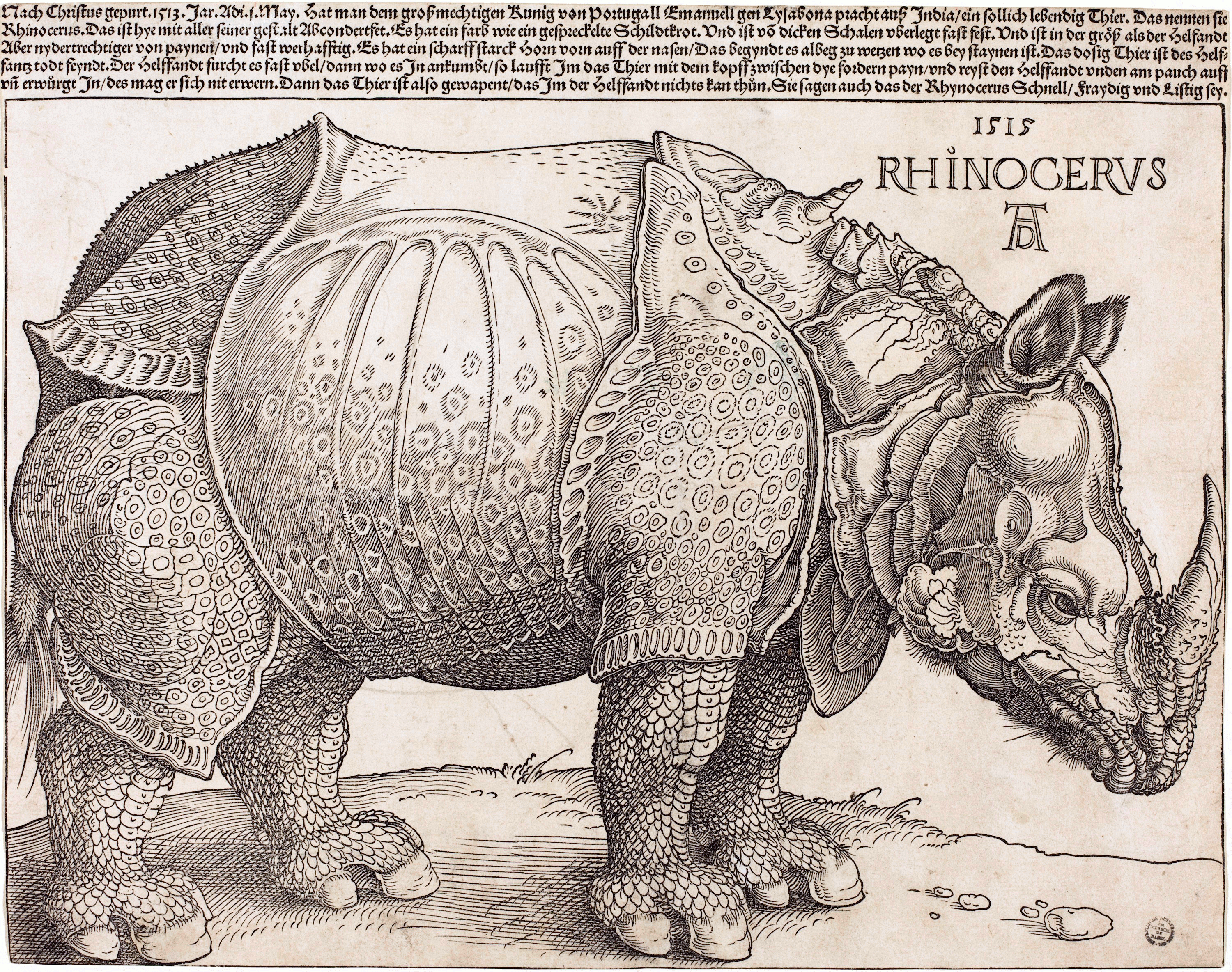
Rhinoceros (1515)
Woodcut; impressions in many collections
Made from a description of an animal he never saw, shown with armour plates
Image: Albrecht Dürer · Public domain, Wikimedia Commons