🪴 GoDeep
Search
← University Challenge
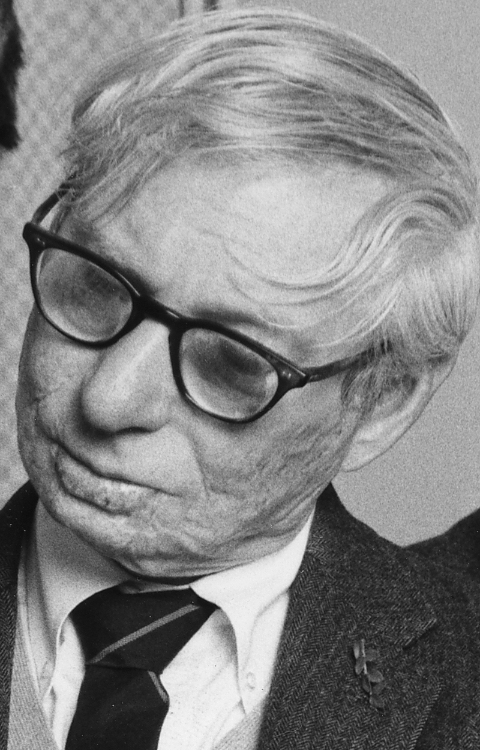
Portrait of Louis Kahn

Architecture · Modernist

Louis Kahn

1901–1974 · Estonian-American

Monumental modernism; 'served and servant' spaces

The most monumental and most mystical of modern architects, who found his voice only in his fifties. Kahn built in brick, travertine and unpolished concrete, arranged buildings round courts, and spoke of asking a material what it wanted to be. His Salk Institute, Kimbell Art Museum and Bangladesh parliament are among the most revered buildings of the century; he died bankrupt and unidentified in a station lavatory.

How to spot them

  • ▸Massive geometric openings — circles, triangles, half-circles — punched through blank brick or concrete walls
  • ▸Board-marked concrete with the tie-holes left showing as lead plugs; travertine; teak that weathers grey
  • ▸Silver, indirect daylight bounced off a curved reflector; 'served' rooms separated from 'servant' shafts of stairs and ducts
  • ▸Quiz clue: 'what does a brick want to be?', 'the ruin wrapped round a building', 'My Architect'

Key buildings

A Californian research laboratory of 1965: two teak-windowed blocks of study towers facing each other across an empty travertine plaza split by a single channel of water running to the Pacific (1965)

La Jolla, San Diego, California

The Salk Institute; the courtyard was left bare on Luis Barragán's advice — 'a facade to the sky'

A Texas museum of 1972 roofed by parallel cycloid concrete vaults, each slit along the top so daylight washes down a perforated aluminium reflector (1972)

Fort Worth, Texas

The Kimbell Art Museum — often called the finest museum interior of the century

A parliament of 1982 rising from an artificial lake, a ring of concrete drums and prisms cut by vast circles and triangles, finished eight years after its architect's death (1982)

Dhaka, Bangladesh

The National Assembly of Bangladesh — commissioned by Pakistan in 1962 and completed for the new state

A 1977 gallery on a New Haven street corner, clad in matt stainless steel and glass round two top-lit internal courts, its architect's last building (1977)

New Haven, Connecticut

The Yale Center for British Art, housing Paul Mellon's collection; completed posthumously

A brick cube of 1971 at a New Hampshire school, hollowed out inside so that four enormous concrete circles frame the stacks around a central atrium (1971)

Exeter, New Hampshire

The Phillips Exeter Academy Library — the largest secondary school library in the world

His first major commission, a 1953 university gallery with a triangulated concrete tetrahedral ceiling and a cylindrical stair tower (1953)

New Haven, Connecticut

The Yale University Art Gallery extension — the building that made his reputation at 52

Key ideas

  • 'You say to a brick, what do you want, brick? And brick says, I like an arch'
  • Served and servant spaces: the rooms people use are kept clear by pushing stairs, lifts and ducts into separate masses
  • Silence and Light — the title of his best-known lecture, pairing the unmeasurable desire to be with the measurable means of building
  • Wrapping ruins round buildings: blank outer walls pierced by great openings, shading glazed walls behind, used at Dhaka and Ahmedabad
  • The room as the beginning of architecture, and the street as a room by agreement

Quick-fire facts

  • •Born Itze-Leib Schmuilowsky on the island of Saaremaa, in what is now Estonia, on 20 February 1901; his family emigrated to Philadelphia in 1906
  • •His face was scarred for life by burning coals when he was a small child
  • •He taught at Yale and then, from 1955, at the University of Pennsylvania
  • •He died of a heart attack in a lavatory at Pennsylvania Station, New York, on 17 March 1974, returning from Ahmedabad; his body lay unidentified in the morgue for days
  • •He left his practice heavily in debt, and had three children by three women
  • •His son Nathaniel Kahn made the Oscar-nominated documentary My Architect (2003) about him
  • •The Indian Institute of Management at Ahmedabad is his other great brick-and-concrete complex
  • •Four Freedoms Park on Roosevelt Island, New York, was designed in 1973 and finally built in 2012
  • •He was awarded the AIA Gold Medal in 1971 and the RIBA Royal Gold Medal in 1972, but died before the Pritzker Prize existed

Drill it — 8 cards

1 / 8new card

Sources

  • David B. Brownlee and David G. De Long — Louis I. Kahn: In the Realm of Architecture
  • Kenneth Frampton — Modern Architecture: A Critical History