A gilded prince under a Gothic canopy in Kensington Gardens, book in hand, ringed by marble groups of the four continents (1862–1872)
Kensington Gardens, London
The Albert Memorial; the commission that won its architect his knighthood in 1872.
Architecture · Gothic & the revivals
1811–1878 · English
Gothic Revival
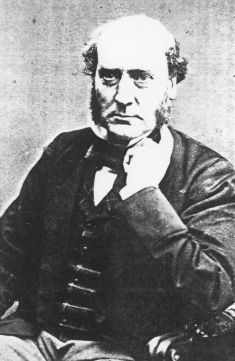
Sir George Gilbert Scott ran the largest architectural practice Britain has ever seen, working on something like 800 buildings. Converted to Gothic by reading Pugin, he built the Albert Memorial and the Midland Grand Hotel at St Pancras, lost the Battle of the Styles over the Foreign Office and had to build it as an Italian palazzo, and restored more English cathedrals than any other man — heavy-handedly enough to provoke William Morris into founding the Society for the Protection of Ancient Buildings.
A gilded prince under a Gothic canopy in Kensington Gardens, book in hand, ringed by marble groups of the four continents (1862–1872)
Kensington Gardens, London
The Albert Memorial; the commission that won its architect his knighthood in 1872.
A red-brick Gothic hotel and train shed in London, saved from demolition after a poet led the campaign (1868–1876)
Euston Road, London
The Midland Grand Hotel fronting St Pancras station; John Betjeman led the fight to save it.
A Whitehall office the architect wanted Gothic, but which a prime minister forced him to build as an Italian palace instead (1861–1868)
Whitehall, London
The Foreign Office, and the defeat that ended the Battle of the Styles; Palmerston insisted on classical.
A spired Eleanor-cross-like monument in Oxford to three bishops burnt in the reign of Mary I (1841–1843)
Oxford, England
The Martyrs' Memorial, to Cranmer, Latimer and Ridley — built with his partner W. B. Moffatt.
A German church whose spire, won in an English architect's competition entry, was for two years the tallest building in the world; the tower now stands alone as a war memorial (1846–1874)
Hamburg, Germany
St Nikolai, Hamburg — tallest building in the world 1874–76; gutted in the 1943 firestorm and kept as a memorial.
A university rehoused on a hill above the River Kelvin, its cloisters and tower in a Gothic hybrid of early French with northern British touches (1866–1870)
Glasgow, Scotland
The Gilbert Scott Building at Gilmorehill; the spire was completed by his son John Oldrid Scott.
An Edinburgh cathedral in Early English style with three spires, paid for by two sisters' bequest (1874–1879)
Palmerston Place, Edinburgh
St Mary's Episcopal Cathedral, built with the Walker sisters' legacy; the two western spires were added later.