ðŸŠī GoDeep
Search
← University Challenge
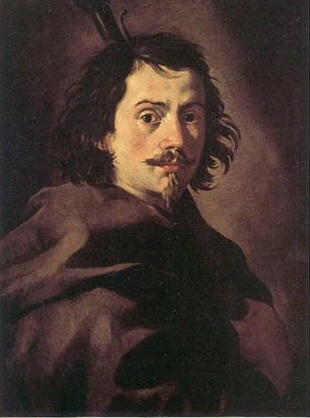
Portrait of Francesco Borromini

Architecture · Classical & Renaissance

Francesco Borromini

1599–1667 · Italian-Swiss (Ticinese)

Roman Baroque

Borromini, born Francesco Castelli at Bissone on Lake Lugano, was the most inventive and least conventional architect of Baroque Rome. Where his rival Bernini worked in marble and theatre, Borromini worked in white stucco and geometry, generating plans from interlocking triangles and ovals and bending walls into continuous undulating surfaces. Poor, solitary and increasingly tormented, he died by his own sword in 1667.

How to spot them

  • â–ļWalls that ripple in and out in a continuous curve; plans generated from triangles, ovals and circles rather than rectangles
  • â–ļWhite stucco and geometry rather than coloured marble; strange invented capitals and window surrounds
  • â–ļA corkscrew spiral lantern, and a dome coffered in shrinking crosses and hexagons
  • â–ļTrained as a stonecutter; the poor, difficult rival of Bernini, and a suicide

Key buildings

A tiny church on a Roman street corner whose front ripples in and out like a wave, with an oval dome coffered in crosses and hexagons (1638–1641 (facade 1664–1667))

Quirinal Hill, Rome

San Carlo alle Quattro Fontane, 'San Carlino' — small enough, it was said, to fit inside a pier of St Peter's.

A university chapel on a star-shaped plan, crowned by a lantern that twists upward like a corkscrew (1642–1660)

Rome, Italy

Sant'Ivo alla Sapienza; the plan is often read as the Barberini bee or as two interlocking triangles.

A concave church front with twin towers, set on the long side of a Roman square opposite a fountain of river gods (1653–1657)

Piazza Navona, Rome

Sant'Agnese in Agone, taken over from Girolamo and Carlo Rainaldi.

A colonnade only about eight metres long, tapering in height and floor so that it appears four times that, with a small statue at the end looking life-sized (1652–1653)

Rome, Italy

The forced-perspective gallery in the courtyard of Palazzo Spada, devised with the mathematician Giovanni Maria da Bitonto.

A brick-and-stucco home and chapel for a congregation of priests, its curved front deliberately likened to a man with open arms (1637–1650)

Rome, Italy

The Oratorio dei Filippini, beside the Chiesa Nuova; the building type that gave its name to the oratorio.

A medieval Roman basilica gutted and recast for a Holy Year, its new nave piers encasing the old columns and framing giant Apostles (1646–1650)

Rome, Italy

The remodelling of St John Lateran for Innocent X's Jubilee of 1650.

A drum and openwork bell tower above a Roman church, bristling with herms, scrolls and flaming torches, and left unfinished (c. 1653–1665)

Rome, Italy

The dome drum and campanile of Sant'Andrea delle Fratte; two of Bernini's Ponte Sant'Angelo angels stand inside.

Key ideas

  • A plan should be generated geometrically, struck with a compass from circles, ovals and triangles, rather than assembled from rectangular rooms
  • The wall is a continuous elastic surface that can be bent concave and convex, not a series of flat planes
  • Ornament may be invented rather than copied from antiquity — the charge that damned him for two centuries

Quick-fire facts

  • â€ĒBorn Francesco Castelli at Bissone in the Ticino; he later took the name Borromini
  • â€ĒHe came to Rome as a stonecutter and worked under his kinsman Carlo Maderno at St Peter's
  • â€ĒHis first independent commission, San Carlo alle Quattro Fontane, was for the Discalced Trinitarians, an order that could pay him almost nothing
  • â€ĒHe and Bernini were bitter rivals; Borromini thought Bernini a showman who did not understand construction
  • â€ĒHe burned many of his drawings shortly before his death; most survivors are in the Albertina in Vienna
  • â€ĒIn 1667, ill and depressed, he ran himself through with a sword and died the following day
  • â€ĒHe is buried in San Giovanni dei Fiorentini, in the tomb of Carlo Maderno
  • â€ĒEighteenth-century classicists loathed him — Francesco Milizia treated his manner as a disease — and his reputation revived only in the twentieth century

Drill it — 7 cards

1 / 7new card

Sources